Explore our high-speed, multi-format bagging lines designed for precise weight control and structural container integrity.
A comprehensive analysis of manufacturing capabilities, material handling integration, and structural requirements for modern production plants.
Ningbo Econe Machinery Co., Ltd. is a professional Industrial Packaging Machinery Manufacturer specializing in automated packaging systems, conveying equipment, and end-of-line automation solutions for global manufacturing industries. Based in Ningbo, China, the company focuses on the design, engineering, and production of integrated packaging machinery that helps manufacturers improve productivity, reduce labor costs, and optimize packaging efficiency.
With extensive experience in industrial automation, Econe Machinery provides a comprehensive range of solutions including automated conveying systems, product feeding equipment, weighing and counting systems, bagging solutions, wrapping systems, labeling integration, inspection systems, case handling equipment, and customized end-of-line packaging automation. These systems are widely applied in food processing, consumer goods, pharmaceuticals, chemicals, electronics, hardware, and industrial manufacturing sectors.
The company emphasizes engineering innovation, production reliability, and flexible customization. Its technical team works closely with customers to develop packaging solutions tailored to specific production requirements, factory layouts, and operational objectives. From standalone equipment to fully integrated packaging lines, Econe Machinery supports projects throughout planning, manufacturing, installation, and commissioning stages.
Equipped with modern manufacturing facilities and strict quality control procedures, Ningbo Econe Machinery is committed to delivering durable, efficient, and user-friendly equipment that meets international standards. The company continuously invests in automation technologies and intelligent manufacturing solutions to help customers adapt to evolving market demands.
Serving clients across Asia, Europe, North America, South America, the Middle East, and other international markets, Ningbo Econe Machinery Co., Ltd. strives to be a reliable partner for businesses seeking advanced packaging automation, conveying systems, and end-of-line production solutions that enhance operational performance and long-term competitiveness.
The global bagging machinery sector is undergoing a rapid transition from simple mechanical operations to highly integrated, cyber-physical ecosystems. The drivers behind this evolution include the critical need for sustainable materials processing, real-time diagnostic reporting via IoT systems, and the minimization of product giveaway through ultra-precise weighing mechanisms.
Enterprise procurement teams in North America, Western Europe, and South America focus heavily on risk mitigation, supply chain visibility, and modular scalability. Key factors analyzed during the procurement lifecycle include:
Modern plants require bagging machinery that seamlessly interfaces with existing MES (Manufacturing Execution Systems) and ERP databases via standardized protocols such as Modbus, Profinet, or EtherCAT.
Operational efficiency declines when changing bag sizes or film materials takes hours. Systems engineered for rapid tool-less adjustment reduce system changeover times to under 15 minutes, boosting overall equipment efficiency (OEE).
Optimized architectures tailored for diverse product bulk densities, flow characteristics, and factory footprint constraints.
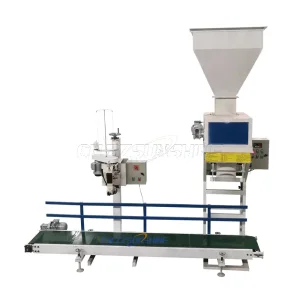
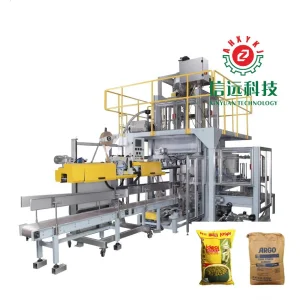
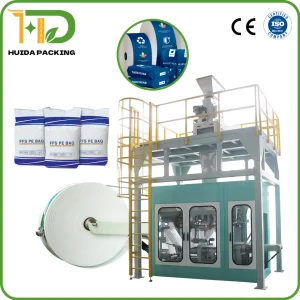
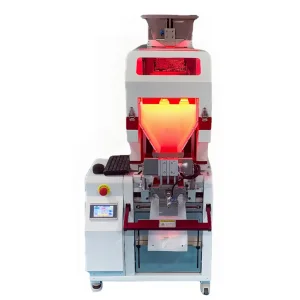
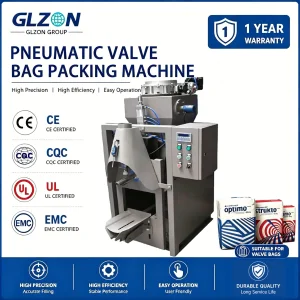
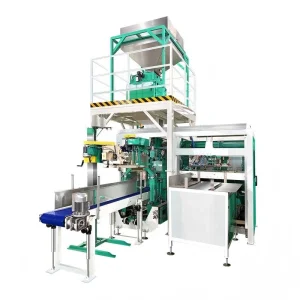
Specifically designed for products like fertilizers, aquafeed, animal feeds, and resin granules. Using a Tubular Form, Fill, and Seal (FFS) or automated mechanical open-mouth handling, these machines manage loads ranging from 10kg to 50kg with integrated dust-free sealing configurations.
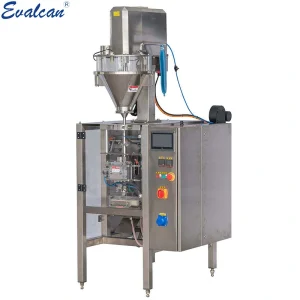
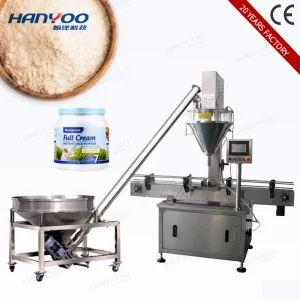
For flour, starch, milk powders, and mineral pigments, dust control is paramount. Utilizing vertical auger fillers with high-accuracy load cells, combined with vacuum de-aeration systems and ultrasonic sealing, our machinery ensures hermetically closed pouches with zero dust leakage.
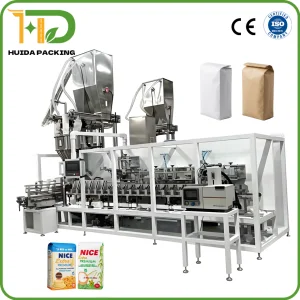
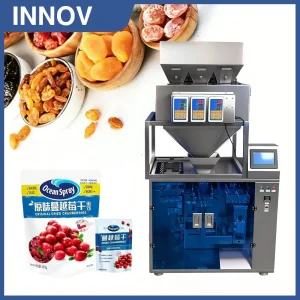
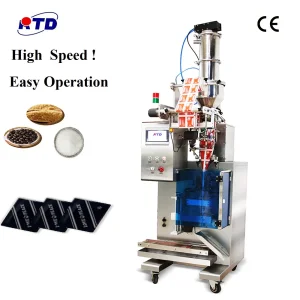
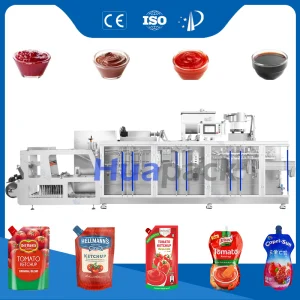
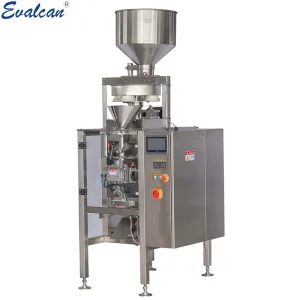
High-speed VFFS (Vertical Form Fill Seal) and rotary stand-up pouch filling machines handle food items like snacks, chips, sugar, salt, coffee, and liquid sauces. Multi-head weighing integration guarantees maximum performance with minimum packaging footprint.
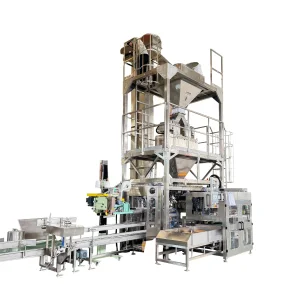
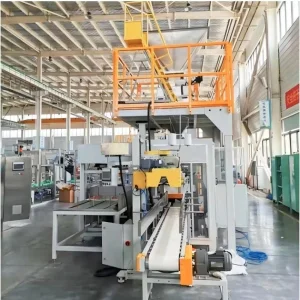
From gravity or belt conveyors to automatic checkweighers, metal detectors, case packer interfaces, palletizers, and stretch wrappers. We deliver unified, plug-and-play end-of-line packaging architectures.
How we ensure global compatibility, safety conformity, and sustainable system integration across international markets.
Enabling edge computing modules to track individual product packet weights and cycle times, syncing production logs automatically with enterprise ERP systems.
Developing intelligent sealing systems that auto-tune temperature and pressure based on real-time material thickness readings to accommodate 100% recyclable mono-PE films.
Integrating industrial neural network cameras right before discharge to verify label placement, date-code printing clarity, and micro-seam integrity.
Global export demands strict adherence to localized safety and sanitary standards. As a global exporter, Ningbo Econe Machinery ensures all equipment meets structural and operational requirements for regional deployments:
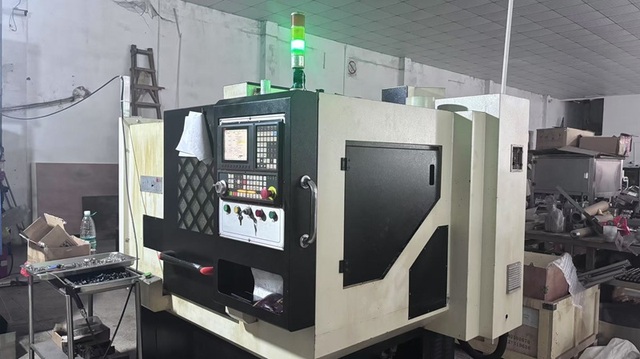
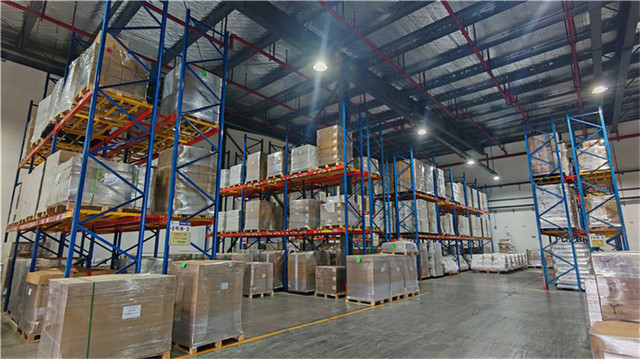
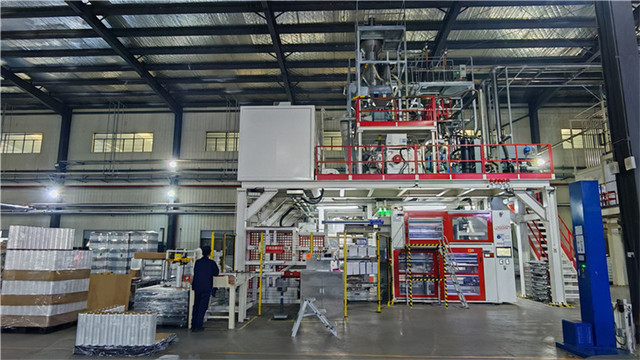
A closer look at our advanced fabrication shops, testing bays, and precision machinery assembly processes.
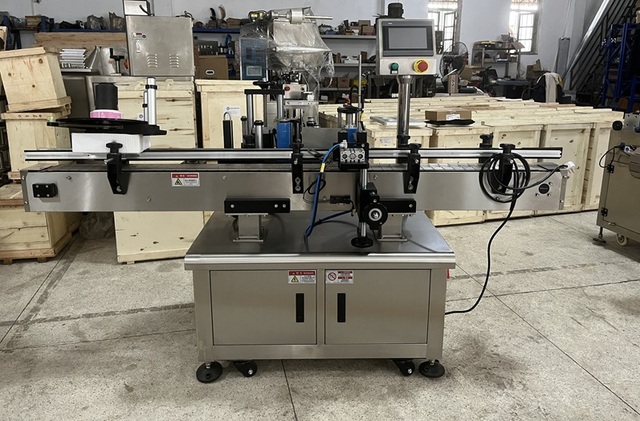
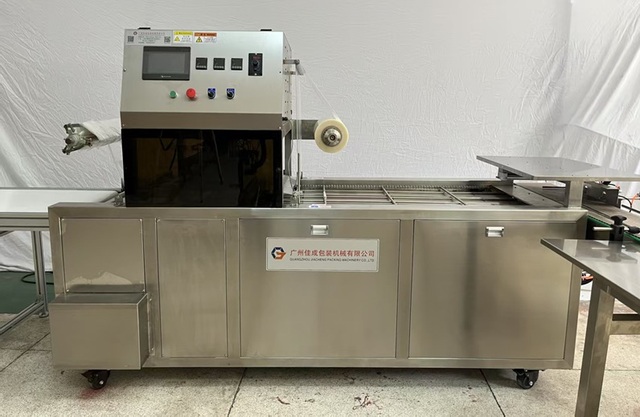
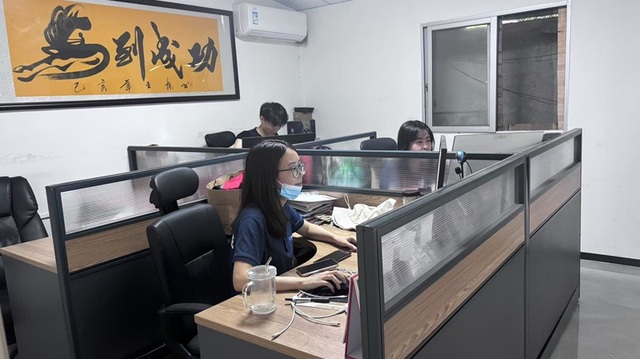
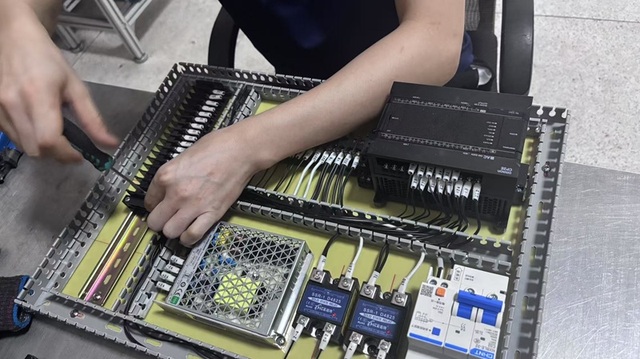
Addressing the core technical, operational, and engineering questions posed by global procurement managers and process engineers.
FFS systems construct bags from a continuous roll of plastic film or tubular reel directly inside the machine before filling, which optimizes material costs and reduces labor. Open-mouth bagging systems, in contrast, use pre-made bags that are mechanically picked, placed, filled, and sewn or sealed. Open-mouth machines offer greater bag-type flexibility (such as multi-wall kraft paper, PP woven, and gusseted bags) and are typically used for high-capacity heavy-duty bulk bagging.
Our flour and powder bagging lines incorporate vertically integrated auger fillers with dust extraction shrouds that connect to localized or plant-wide vacuum networks. We also feature product de-aeration systems within the dosing tube, bottom-up filling capabilities to reduce product fall distance, and specialized bag clamping interfaces that create a sealed environment during the discharge cycle. Ultrasonic sealing can be utilized to clean the seal area before finalizing the weld, ensuring structural integrity.
Accuracy is driven by several physical and electronic factors: consistent head pressure in the product hopper, product bulk density variations, ambient plant vibration, feed gate speed, and load cell response speed. We mitigate accuracy variance by utilizing multi-stage dosing gates (coarse and fine feed cycles) paired with digital filtering algorithms on our PLC-controlled load cells, reaching consistent accuracy tolerances of ±0.1% to ±0.2% of target package weight.
Yes. Our modern sealing systems feature PID temperature-controlled heating bars and programmable cooling delays to prevent burning or tearing thinner bio-polymer films. For kraft paper bags, we integrate precision sewing heads, crepe tape applicators, or hot-melt adhesive units. This flexibility allows manufacturers to meet regional environmental regulations without reducing production throughput.
We provide comprehensive global installation, commissioning, and operator training services. Machine parameters can be monitored remotely via integrated VPN routers for swift software adjustments and diagnostics. Spare parts are dispatched via fast courier services. We utilize globally recognizable hardware components (such as Siemens, Festo, SMC, Omron, and Schneider) to ensure operators can quickly source replacement parts locally.
Standard heavy-duty bagging lines require 380V-460V, 3-Phase, 50Hz/60Hz AC electrical power. Pneumatic air pressure needs to stay at a steady 0.6–0.8 MPa (6–8 bar), with consumption volumes varying based on speed and mechanical configuration (ranging from 150 Nl/min to 600 Nl/min). Air quality must meet ISO 8573-1 Class 4 specifications (clean, dry, and filtered) to prevent premature solenoid valve or cylinder failure.
Explore high-precision hardware systems, food-grade pouch packaging machinery, and custom-engineered bagging systems.
 Econe Machinery