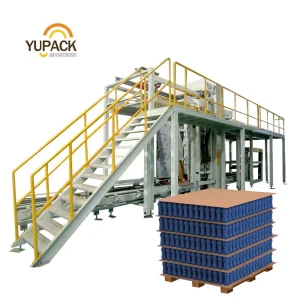
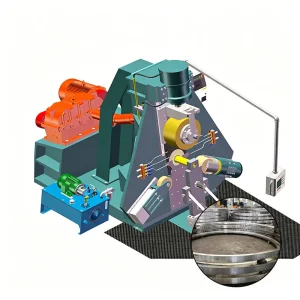
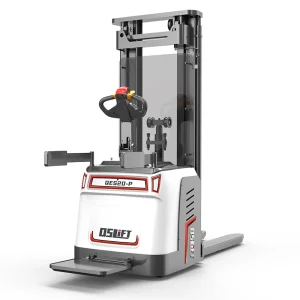
Explore Econe Machinery's flagship packaging automation platforms, precision material handling components, and industrial scanning solutions.
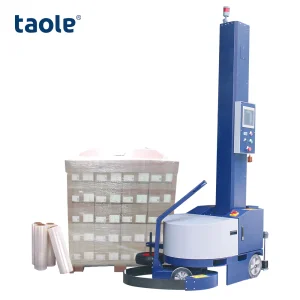

An authoritative breakdown of modern labeling requirements, material technologies, and strategic supply chain dynamics.
In modern industrial applications, custom labels are far more than visual indicators. They are engineered structural components designed to withstand environmental challenges while maintaining critical data legibility. Selecting a high-tier custom labels manufacturer requires assessing their expertise in polymer film extrusion, surface coatings, and synthetic adhesive properties. From biaxially oriented polypropylene (BOPP) and polyethylene terephthalate (PET) to advanced polyimide substrates, the physical chemistry of the label must align precisely with the operational stresses of the product's life cycle.
Adhesive performance is governed by surface energy chemistry. High-speed automatic label application demands uniform release values and precise shear resistance. Whether your application requires emulsion acrylics for permanent product branding, synthetic rubbers for cold-chain adhesion, or silicone coatings for clean-removability, working with a sophisticated exporter ensures that the chemical properties of your labels are optimized to eliminate line downtime and prevent application peeling.
Exporting to global jurisdictions demands compliance with strict regional and international mandates. Top-tier manufacturers maintain rigorous quality control frameworks, offering traceability profiles compliant with FDA Title 21 CFR 175.105 for indirect food contact, UL969 for component markings, and European Union RoHS/REACH chemical thresholds. Neglecting these standards in custom labeling selection can lead to costly border blockages and liability issues.
Furthermore, label structure must account for compatibility with high-speed automated machinery. Dimensions, die-cutting alignment, liner tensile strength, and release values dictate the operational limits of mechanical labeling heads. Integrating high-performance custom labels with machinery systems, such as automated filling systems and end-of-line conveyors, is essential for high-throughput packaging environments.
A data-backed evaluation of the cost-efficiencies, logistics, and material integration benefits derived from Chinese label production facilities.
Ningbo Econe Machinery Co., Ltd. is a professional Industrial Packaging Machinery Manufacturer specializing in automated packaging systems, conveying equipment, and end-of-line automation solutions for global manufacturing industries. Based in Ningbo, China, the company focuses on the design, engineering, and production of integrated packaging machinery that helps manufacturers improve productivity, reduce labor costs, and optimize packaging efficiency.
With extensive experience in industrial automation, Econe Machinery provides a comprehensive range of solutions including automated conveying systems, product feeding equipment, weighing and counting systems, bagging solutions, wrapping systems, labeling integration, inspection systems, case handling equipment, and customized end-of-line packaging automation. These systems are widely applied in food processing, consumer goods, pharmaceuticals, chemicals, electronics, hardware, and industrial manufacturing sectors.
The company emphasizes engineering innovation, production reliability, and flexible customization. Its technical team works closely with customers to develop packaging solutions tailored to specific production requirements, factory layouts, and operational objectives. From standalone equipment to fully integrated packaging lines, Econe Machinery supports projects throughout planning, manufacturing, installation, and commissioning stages.
Equipped with modern manufacturing facilities and strict quality control procedures, Ningbo Econe Machinery is committed to delivering durable, efficient, and user-friendly equipment that meets international standards. The company continuously invests in automation technologies and intelligent manufacturing solutions to help customers adapt to evolving market demands.
Serving clients across Asia, Europe, North America, South America, the Middle East, and other international markets, Ningbo Econe Machinery Co., Ltd. strives to be a reliable partner for businesses seeking advanced packaging automation, conveying systems, and end-of-line production solutions that enhance operational performance and long-term competitiveness.
Chinese label manufacturing clusters possess complete upstream chemical resources, enabling direct access to base monomers, acrylic polymers, and release liners. This vertical concentration lowers materials costs and guarantees supply chain stability.
Using advanced rotary die-cutting systems and computer-controlled flexographic/digital hybrid printing presses, Chinese exporters deliver precision dimensional accuracy with registration tolerances kept under 0.1mm.
Located in deep-water port clusters like Ningbo-Zhoushan and Shanghai, manufacturers provide optimized customs clearances, direct ocean freight connections, and robust container planning to minimize transit times and import fees.
A comparison of regional market compliance standards and testing methods required for global custom label supply chains.
| Target Region | Compliance Mandate | Technical Parameters & Requirements | Recommended Substrates / Materials |
|---|---|---|---|
| United States (FDA) | FDA 21 CFR 175.105 | Safe for indirect food contact, migration testing, low-odor solvents | Premium Grade PET, Clay-Coated Paper, Low-Migration Water-Based Acrylics |
| European Union | EU Regulation 1935/2004, REACH | SVHC chemical compliance, phthalate-free, non-toxic pigment formulations | BOPP, PE Films, Halogen-Free Materials, Bio-based Degradable Adhesives |
| Global Industrial | UL 969 (Marking Systems) | Thermal resistance up to 150°C, chemical resistance to fuels and solvents | Polyimide films, Matte Silver Polyester, High-Shear Solvent Acrylics |
| Electronics Manufacturing | RoHS Directive, ESD Protection | Lead-free, cadmium-free, static-dissipative topcoats to protect IC chips | Antistatic Polyimide (Kapton), Conductive Acrylic Adhesive layer |
Under-the-hood applications require custom labels to survive continuous exposure to engine oils, gasoline, brake fluids, and operational temperatures fluctuating from -40°C to +150°C. Heavy-duty cross-linked solvent adhesives prevent edge-lifting and peeling over the automotive component's lifespan.
Vial and syringe labeling presents tight-mandrel adhesion challenges (wrapping around surfaces as small as 10mm in diameter). Specialized adhesive formulations prevent flagging (peeling at the edges), while cryogenic-grade adhesives ensure security in deep-freeze environments down to -196°C.
High-volume parcel transit calls for direct thermal and thermal transfer labels that can withstand friction, abrasion, and moisture. Ensuring high scan rates for barcode and QR imagery is vital, especially when integrated with high-performance automated conveyor systems and sorting lines.
A strategic overview of smart technologies and ecological transformations shaping the future of global product tracking.
The global transition toward intelligent inventory and asset tracking has pushed RFID (Radio Frequency Identification) and NFC (Near Field Communication) tags into mainstream industrial packaging. Modern label manufacturers are incorporating ultra-thin antenna inlays directly between the face stock and the liner. This allows real-time automated asset tracking across sorting lines without direct visual alignment.
Environmental regulations are driving the adoption of circular economies. Leading label producers are transitioning to post-consumer recycled (PCR) plastics, wood-free cellulose, and compostable polylactic acid (PLA) face stocks. When paired with water-washable adhesives that cleanly separate during recycling, these setups ensure compliance with international sustainability laws.
Labels are key functional components in automated assembly. Choosing custom label stock requires matching it to the target application machinery's specifications:
Expert insights on key procurement factors, materials selection, and manufacturing procedures.
Direct Thermal printing utilizes heat-sensitive chemical paper layers that darken under thermal print heads, removing the need for ribbons. However, these labels are sensitive to heat, UV exposure, and mechanical friction, making them best for short-term applications like shipping labels. Thermal Transfer printing uses a thermal head to melt a carbon ribbon onto the label substrate. This creates a durable, scratch-resistant print image suitable for long-term product tracking and challenging industrial environments.
Shear strength is the measure of an adhesive's resistance to static shear forces. In high-speed labeling machinery, labels are drawn across sharp dispensing edges. If the adhesive shear strength is too low, the label may ooze adhesive, contaminating print heads and application rollers. Selecting an adhesive with balanced peel and shear values prevents gum residue and ensures clean detachment during high-speed applications.
The backing liner acts as the structural carrier for the labels through the die-cutting and application phases. Standard glassine liners are suited for low-speed lines, but high-performance automated systems require high-tensile PET liners. PET liners minimize web breaks and maintain uniform thickness, which helps prevent sensor tracking errors during high-speed applications.
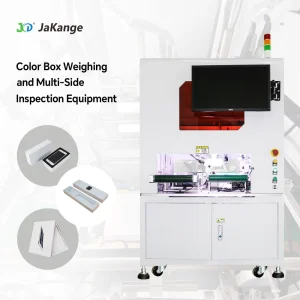
Top-tier manufacturers integrate online CCD vision inspection systems directly onto the printing press. These systems compare every printed label against the reference digital artwork at high speeds. If the system detects any print defects, color deviations, or bad barcodes, the affected area is flagged, ensuring only 100% compliant rolls reach shipment.
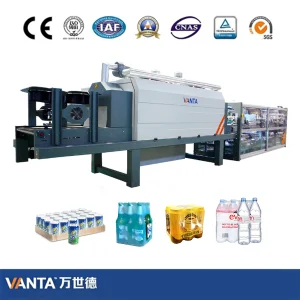
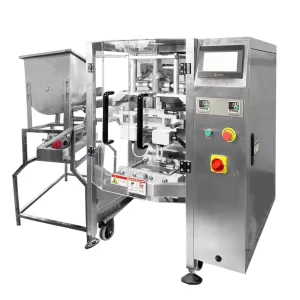
Explore Econe Machinery's solutions for automatic depalletizing, heat shrinking, circular conveying, and retail bagging.
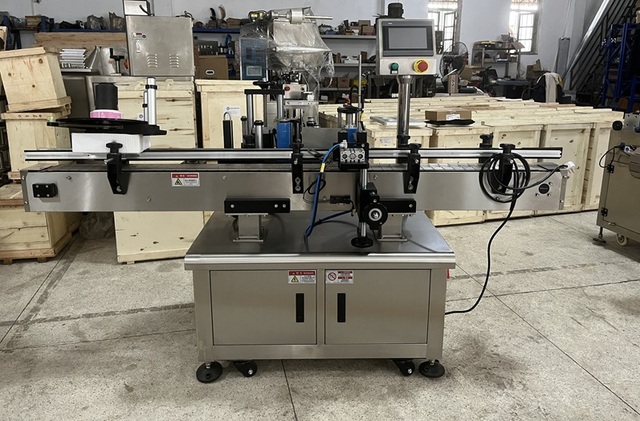
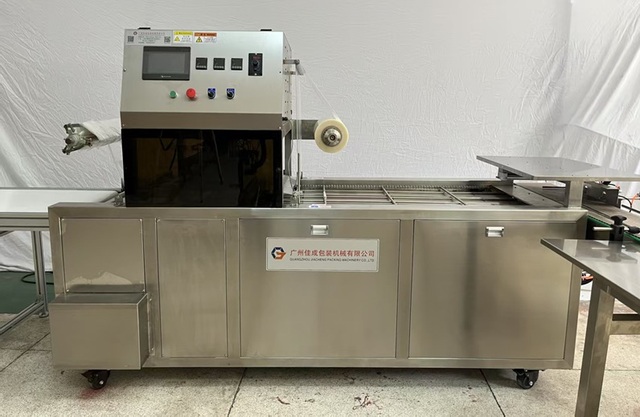
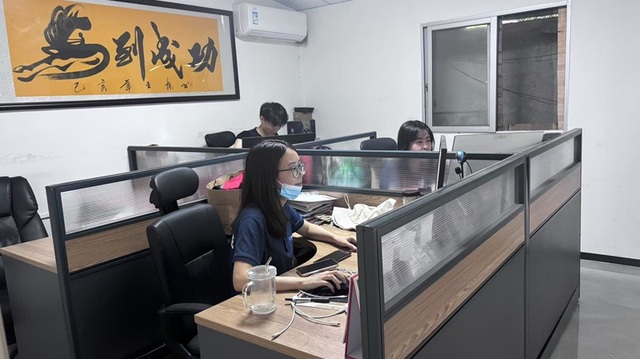
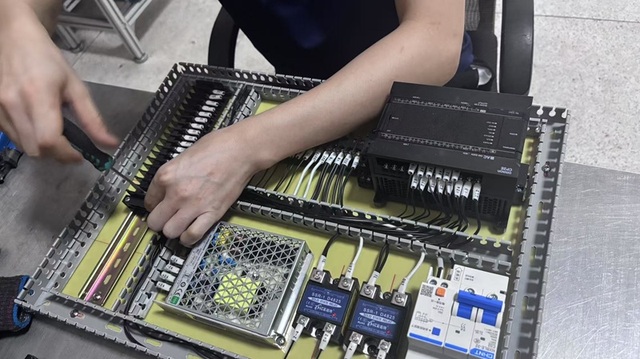
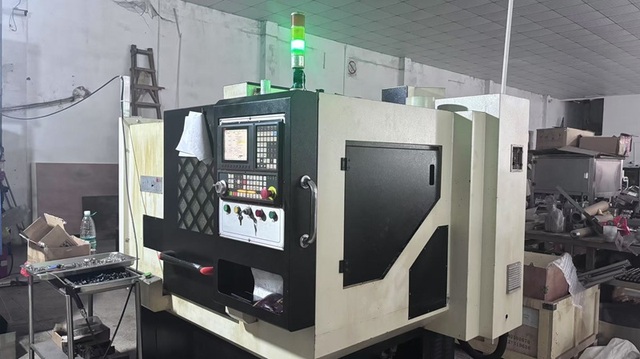
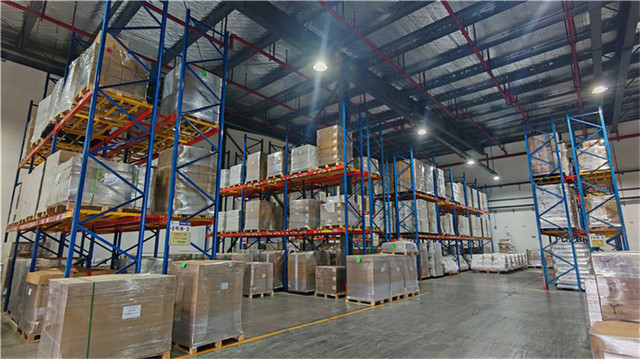
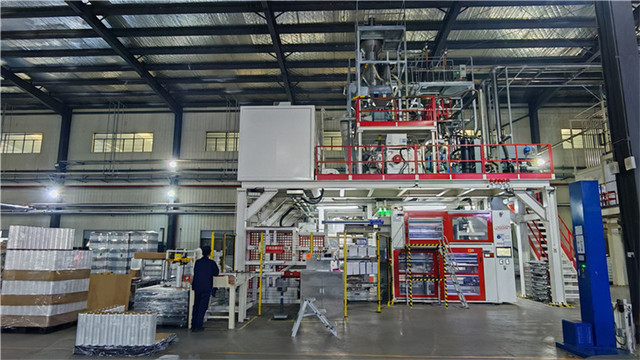
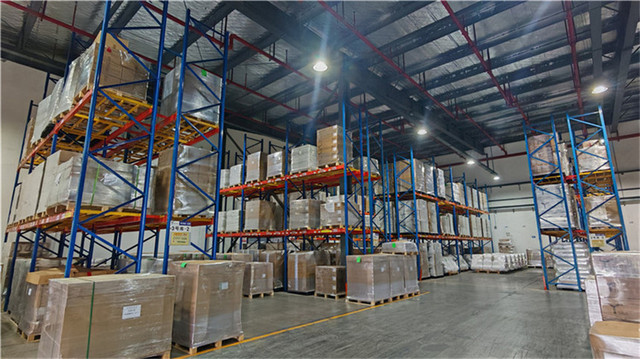
Take a virtual tour of Ningbo Econe Machinery's production environment, CNC operations, assembly bays, and quality control systems.
 Econe Machinery