Econe Machinery


1 / 5
Typical Workpieces: Car frame, chassis, dashboard, door pillar
Marking Content: 17-digit Vehicle Identification Number (VIN), serial number, production date
Handheld Advantage: No need to disassemble the vehicle body, perfect for production line offline marking, repair shop re-marking, and used car market traceability
Typical Workpieces: Engine block, cylinder head, crankshaft, gearbox housing, transmission
Marking Content: Part number, serial number, batch number, QR code for traceability
Handheld Advantage: Mark directly on assembled engines and gearboxes, no need to transport heavy components
Typical Workpieces: Wheel hub, axle, control arm, shock absorber, brake disc
Marking Content: Specification, material grade, production batch, anti-counterfeiting code
Handheld Advantage: Can mark on curved and irregular surfaces with uniform effect
Typical Workpieces: Bolts, nuts, bearings, brake pads, gaskets
Marking Content: Strength grade, manufacturer code, production date
Handheld Advantage: No tooling required, fast switching between different small parts
Typical Workpieces: Car door, bumper, fender, fuel tank, exhaust pipe
Marking Content: LOGO, model number, certification mark
Handheld Advantage: Lightweight marking head (≤2kg), easy to operate for long periods without fatigue
Typical Scenarios: VIN code correction, re-marking after repair, used car identification
Marking Content: Supplementary VIN code, repair date, service record
Handheld Advantage: Portable design allows on-site service at repair shops, 4S stores, and used car markets
| The Biggest Challenges in Automotive Marking (Traditional Methods) | Our Automotive-Specific Handheld Laser Marking Solution |
|---|---|
|
Inflexible Machinery
Desktop machines cannot handle large/heavy workpieces (frames, chassis, engine blocks) that cannot be moved.
|
Highly Portable
No need to move workpieces: Mark directly on any size and weight of automotive parts on site.
|
|
Label Durability Issues
Adhesive labels fall off easily in high-temperature, oily, and abrasive environments, breaking the traceability chain.
|
Permanent and Tamper-Proof
Laser engraves 0.1-0.5mm deep into the material surface, never fades or wears.
|
|
Inefficient Workflows
Slow on-site re-marking leads to production line downtime and high labor costs.
|
Meets Global Regulatory Standards
Fully compliant with ISO 3779, GB 16735, ECE R61, and SAE J853 VIN code standards.
|
|
Risk of Forgery
Markings are easy to tamper with, causing huge risks of counterfeiting and quality claims.
|
High Precision and Readability
±0.1mm accuracy, supports 17-digit VIN codes, QR codes, and barcodes that can be scanned even after years of use.
|
|
Regulatory Constraints
Cannot meet the strict requirements of global automotive regulations for permanent, readable, and standardized identification.
|
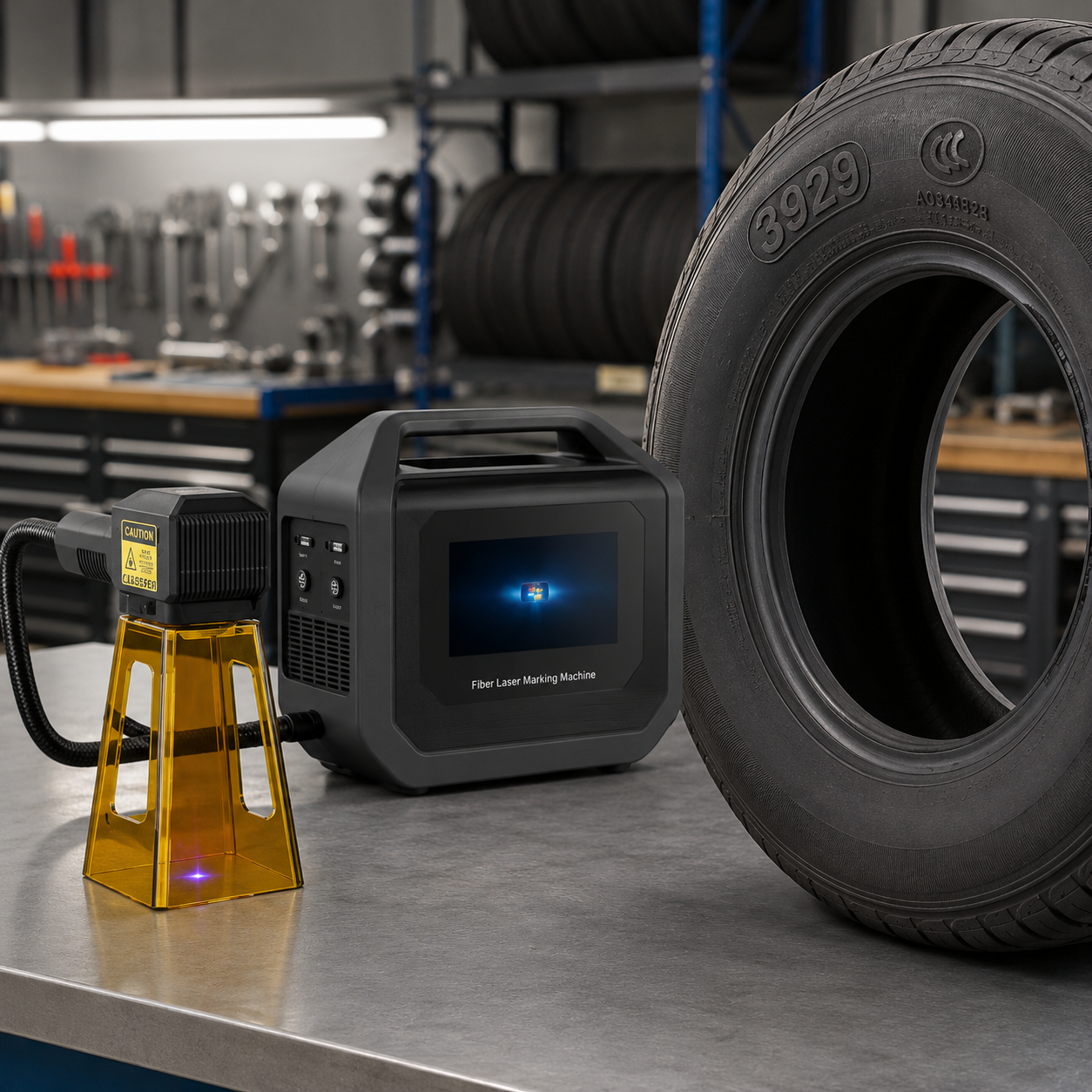
Battery Powered Option
Supports 4-8 hours of outdoor field work without a power supply.
|