Discover our flagship high-speed, intelligent robotic depalletizing equipment deployed in North American facilities
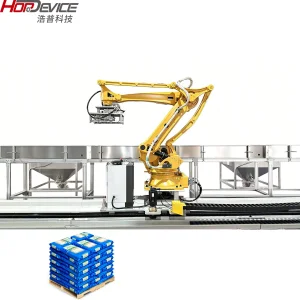
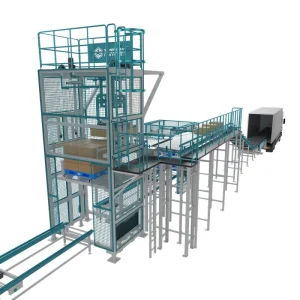
In the United States, industrial automation has transitioned from a competitive advantage to an operational necessity. The rapid expansion of e-commerce, consumer packaged goods (CPG), pharmaceutical production, and heavy chemical processing has placed unprecedented pressure on logistics pipelines. Warehouses, fulfillment centers, and manufacturing plants across major US hubs—from the Inland Empire in California to the logistical corridors of Chicago and Atlanta—are undergoing intense modernization.
At the heart of this revolution are depalletizing systems. Traditionally, unloading pallets of raw materials, ingredients, chemical sacks, or mixed retail boxes was a highly manual task. Today, the manufacturing sector in the United States faces severe labor shortages, high employee turnover rates, and rising worker compensation costs due to repetitive strain injuries. Implementing robotic and automated depalletizers direct from leading suppliers has emerged as the most cost-effective path to optimizing end-of-line processing, enhancing safety, and stabilizing operational margins.
The Occupational Safety and Health Administration (OSHA) enforces strict guidelines regarding manual lifting, repetitive motion injuries, and ergonomic hazards in the workplace. Heavy lifting of bags, boxes, glass bottles, and drums poses severe safety risks. By integrating intelligent robotic unpacking and bag-breaking systems, factory owners can eliminate manual handling entirely. Systems designed with dust-free containment hoods and integrated exhaust filtration prevent respiratory hazards, particularly when dealing with toxic chemical powders or agricultural granules.
Accelerate your intake line speed. Modern robotic grippers perform up to 1000+ pick cycles per hour, maintaining continuous operations without fatigue.
Drastically reduce workers' compensation claims by eliminating heavy lifting. Ensure dust-free, fully enclosed powder handling environments.
Utilize cutting-edge AI vision systems to dynamically identify, sort, and process complex mixed-load pallets without program adjustments.
Depalletizing Accuracy
Average ROI Period
Picks Per Hour Capacity
Manual Lifting Strain
Sourcing the right depalletizing system requires understanding the mechanical and digital integration required. The industry has advanced beyond simple mechanical sweep-style unloaders. Today's architectures integrate artificial intelligence, 3D vision mapping, advanced end-of-arm tooling (EOAT), and IoT-enabled control loops.
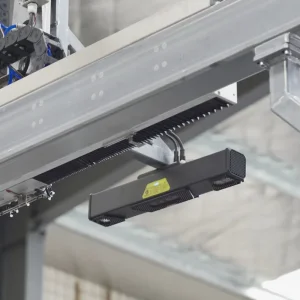
Historically, robotic systems struggled with variations in pallet quality, package deformation, and mixed-case pallets. Modern installations in the US leverage 3D structured light or Time-of-Flight (ToF) cameras. Coupled with neural networks, the system maps the top layers of the pallet, calculates coordinates, recognizes edge boundaries, and adjusts the robot's approach vector in real-time. This eliminates downtime caused by shifted pallets during transit.
The grip mechanism is the point of failure or success. Leading factories deploy intelligent hybrid end-effectors:
For chemical, pharmaceutical, and food-ingredient plants, depalletizing often transitions immediately to debagging. Systems equipped with integrated dust extraction, automatic empty-bag compaction, and closed-loop dosing guarantee that powders are introduced into the processing system safely without contaminating the production environment or exposing operators to hazardous airborne particulate matter.
US buyers look for systems configured specifically to their industrial vertical. Here is how advanced automatic depalletizing systems solve sector-specific challenges across the United States:
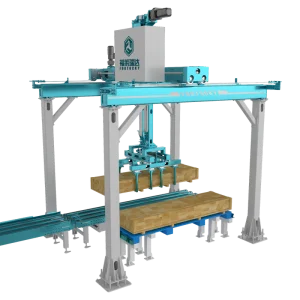
US food processing operations demand high sanitary standards. Systems must deal with glass bottles, aluminum cans, plastic containers, and raw ingredient sacks. High-level layer depalletizers and low-level gantry designs allow manufacturers to feed filling and packaging lines at extreme speeds. Standard features include washdown-compatible stainless steel structures, quick-change grippers, and smooth integration with downstream washing, filling, and pasteurizing machinery.
Raw materials often arrive in heavy 25kg/50lb sacks stacked on wooden pallets. The combination of robotic picking with automatic bag-breaking, dust-free emptying, and automatic powder dosing solves two massive problems: human labor exhaustion and chemical exposure. Modern solutions provide explosion-proof (Class I/II, Div 1/2) components required by US safety codes.
Speed and flexibility are critical. Distribution centers handle hundreds of SKUs. Robotic palletizing and depalletizing picking systems interface with Warehouse Management Systems (WMS) and Warehouse Control Systems (WCS) using standard industrial protocols such as EtherNet/IP or PROFINET. This enables seamless flow of inventory information, ensuring immediate processing of inbound shipments.
For US-based enterprises, selecting a depalletizing equipment supplier requires balancing capital investment against mechanical reliability and lifetime support. Partnering with a premier manufacturer like Ningbo Econe Machinery Co., Ltd. offers a strategic path to maximize return on investment (ROI).
By leveraging China’s deep advanced manufacturing clusters—particularly in Ningbo, a global hub for precision mechanical engineering and logistics—Econe Machinery delivers heavy-duty, highly customized depalletizing systems at a fraction of the cost of domestic European or North American system integrators.
Expert answers to critical engineering, safety, and integration questions regarding automated depalletizing systems
Our systems utilize advanced 3D vision sensors and real-time point-cloud mapping. If a pallet is warped, or if cardboard boxes have sagged or shifted during inter-state transit, the vision software recalculates the exact height and angle of the top layer, adjusting the pick vector to prevent dropped items or system collisions.
Yes. All systems shipped to the United States can be integrated with safety fences, light curtains, dual-channel safety door switches, and emergency stop circuits that meet or exceed OSHA 1910 and ANSI/RIA R15.06 robotic safety standards.
Design and manufacturing take 8 to 12 weeks depending on customization. Shipping to major US ports (LA, NY, Houston) takes 3 to 4 weeks. Commissioning can be supported remotely via industrial VPN links, or by dispatching partner field engineers for onsite integration.
The debagging module is completely enclosed and connected to a high-capacity dust collector. As the robot positions the bag and the cutting knives slit the bottom, a negative pressure environment prevents fine powders (such as chemical pigments, cement, flour, or toxic active pharmaceutical ingredients) from escaping into the factory air.
Explore our wide array of systems designed to handle cartons, bags, bottles, cans, and bulk drums
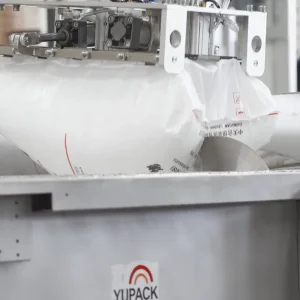
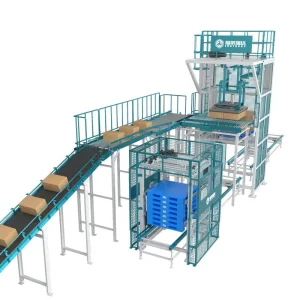
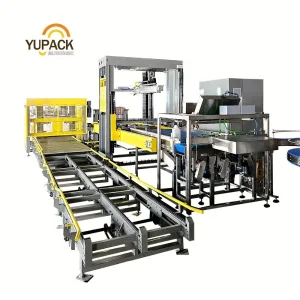
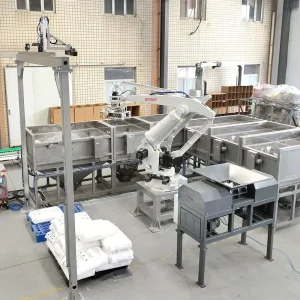
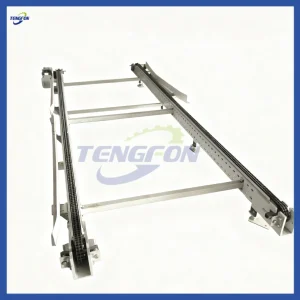
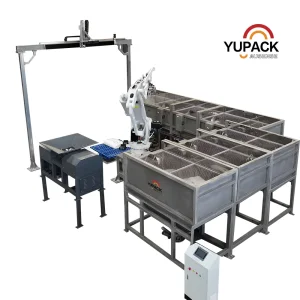
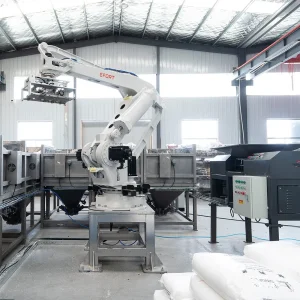
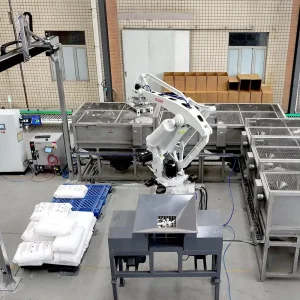
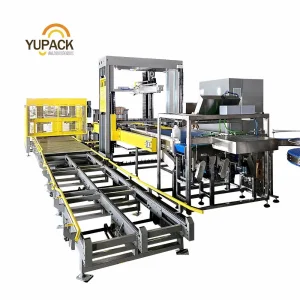
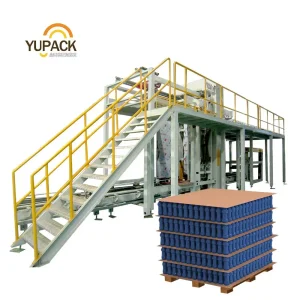
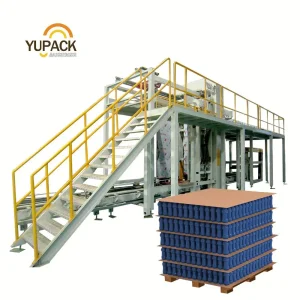
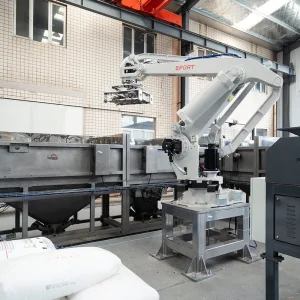
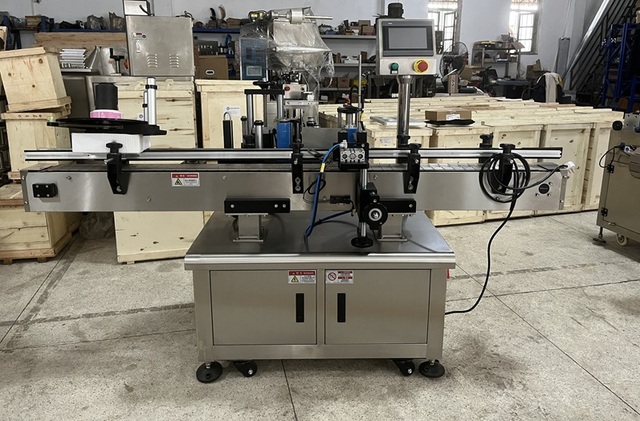
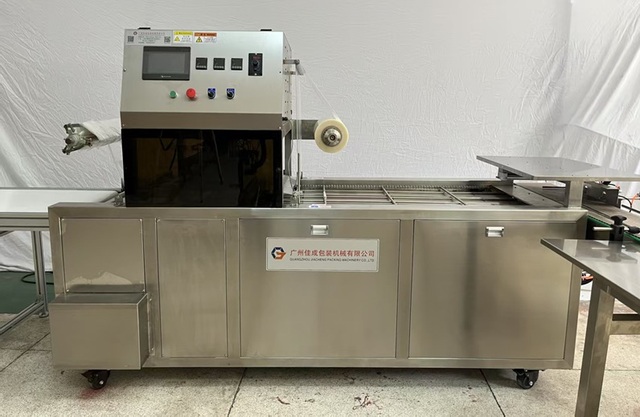
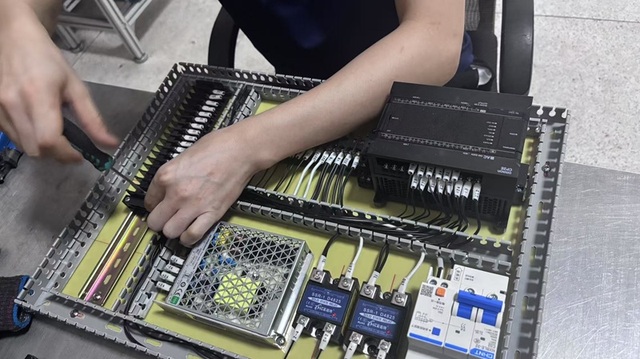
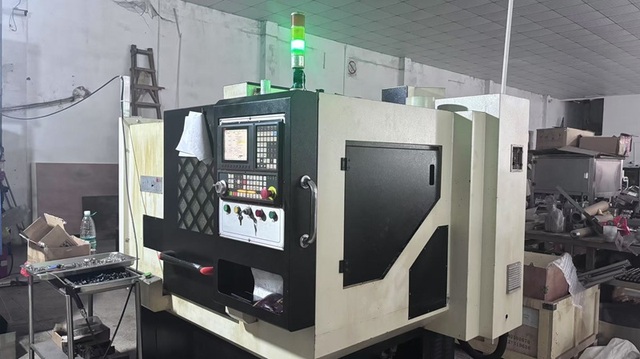
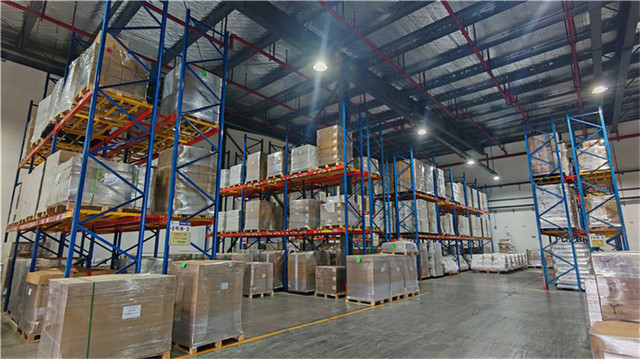
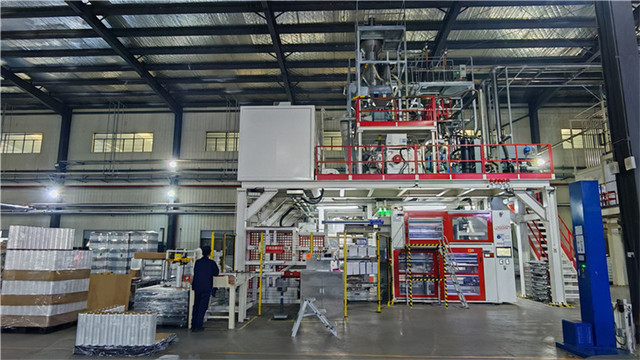
A sneak peek into Econe Machinery's advanced production capacity, quality assurance, and system integration floor
 Econe Machinery