Why is packaging automation important for global buyers? Because a carton crossing a fast line represents more than speed. It reflects order accuracy, product protection, labor availability, and the buyer’s ability to meet changing demand. For importers and brand owners, automation can help suppliers maintain consistent fills, seals, labels, and case counts across large production runs. It can also make output less dependent on repetitive manual tasks. That matters when one delayed shipment disrupts a launch or leaves a shelf empty.
The scale is significant. The International Federation of Robotics’ World Robotics 2024 report recorded 541,302 industrial robot installations worldwide in 2023, showing how widely manufacturers are adopting automation. Packaging-specific evidence points in the same direction: PMMI’s 2024 State of the Industry report tracks investment in packaging and processing equipment amid labor and productivity pressures. These reports do not prove that every automated line pays off. They do show why buyers increasingly assess a supplier’s equipment, changeover time, and maintenance plan—not just its unit price. Automation researcher Erik Brynjolfsson offered a useful principle: “The key to winning the race is not to compete against machines but to compete with machines.” In packaging, that means designing systems that support skilled workers, not simply removing them from the line. Automation is not a cure-all. A poorly planned line can move the bottleneck from packing to changeovers, inspection, or repairs. Buyers should ask for real throughput data, reject rates, and service records. The details matter.
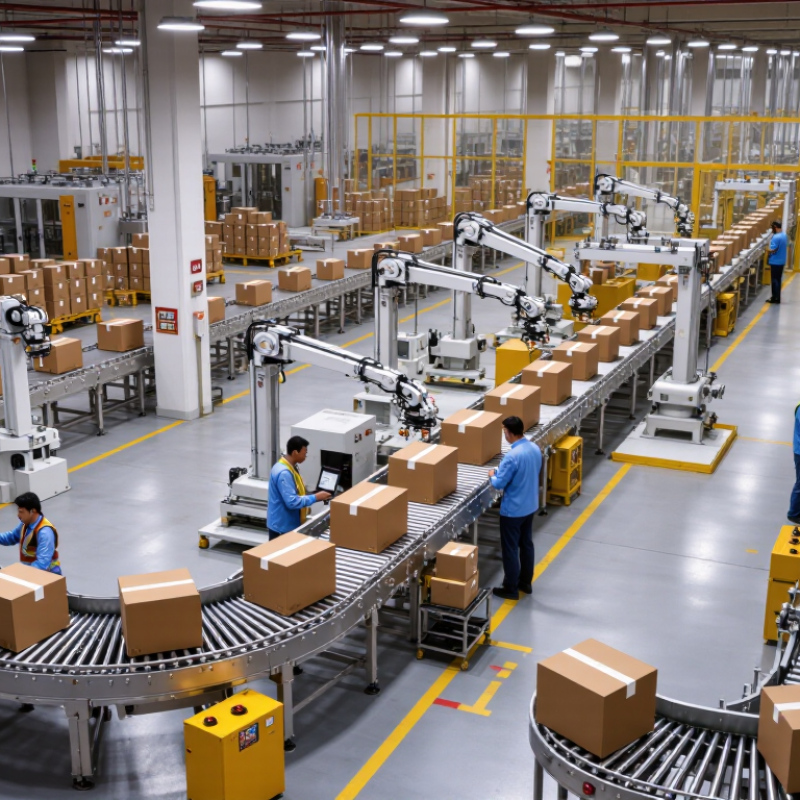
Why Is Packaging Automation Important for Global Buyers?
What Packaging Automation Includes in Global Supply Chains
Packaging automation covers more than filling products or sealing boxes. A typical line may include conveyors, weighing systems, fillers, case erectors, sealers, labelers, and palletizers. Sensors and control software coordinate these steps and flag issues such as missing labels or uneven case flow. In global supply chains, buyers also need equipment that works with different package sizes, shipping cases, and destination requirements. A fast machine is not useful if its output cannot fit the warehouse process.
Tips: Map the full route before choosing equipment. Check package dimensions, line speed, changeover time, and how operators will clear jams. Ask suppliers how spare parts, training, and remote support will work across locations. Small details matter.
Automation can reduce repetitive handling and make output more consistent, but it does not remove every risk. A line may run smoothly with one carton size and struggle after a format change. Test representative products and packaging materials before final approval. Confirm that machines can communicate with existing systems, and leave enough floor space for maintenance access. A technically efficient line can still frustrate operators when changeovers are awkward. That trade-off deserves an honest review.
| Supply-Chain Dimension | What Packaging Automation Includes | Useful Data to Track | Why It Matters to Global Buyers |
|---|---|---|---|
| Primary packaging | Filling, forming, sealing, wrapping, or placing a product in its immediate packaging. | Units per hour; fill or package accuracy; reject rate; material use per unit. | Stable packaging processes support consistent product protection and help buyers compare production capacity with demand. |
| Secondary packaging | Grouping primary packs into cartons, trays, multipacks, or other retail and distribution units. | Packs per case; cases per hour; carton dimensions; case-seal failure rate. | Case format and strength affect storage, handling, and compatibility with downstream distribution operations. |
| Inspection and quality control | Automated checks such as presence, count, seal, print, weight, or visible-defect inspection. | Inspection coverage; accepted and rejected quantities; defect categories; false-reject rate. | Recorded inspection results make quality issues easier to identify and investigate across suppliers and destinations. |
| Labeling and traceability | Applying and verifying product, case, and shipment labels; capturing identification and production data. | Label verification rate; lot or batch code; production date; destination-specific label fields. | Label content and language requirements vary by product and destination. Buyers should confirm requirements for each market before production. |
| Case packing and order preparation | Loading products into shipping cases, arranging mixed or single-item orders, and closing cases. | Order accuracy; cases per hour; pack pattern; case weight and dimensions. | Reliable case configuration supports warehouse handling and helps buyers plan freight, storage, and order fulfillment. |
| Palletizing and unit loads | Stacking cases or other loads on pallets, with optional wrapping or stabilization. | Cases per pallet; pallet height and weight; load stability; pallet type and dimensions. | Pallet requirements can differ by buyer, carrier, and destination. Confirm the required pallet specification and load limits before shipment. |
| Line performance | Coordinating equipment, changeovers, operators, and production schedules across the packaging line. | Throughput; downtime by cause; changeover time; scrap; overall equipment effectiveness (OEE). | OEE is commonly calculated as availability × performance × quality. Tracking its components helps buyers assess operational performance without relying on a single headline figure. |
| Data and system integration | Exchanging production, quality, inventory, and shipment information with manufacturing and warehouse systems. | Data completeness; event timestamps; batch-to-shipment links; system or label exceptions. | Consistent records improve visibility from production through dispatch and support faster reconciliation when orders or shipments need investigation. |
Buyer note: Automation scope and performance depend on product, packaging format, line configuration, and operating conditions. Request measured results and agreed test criteria for the specific product and destination rather than assuming a universal capacity or savings figure.
Cartons may pass from humid ports to dry warehouses, then onto trucks. Small errors travel. More than 80% of global goods trade by volume moves by sea, according to a 2024 UN report.
Case erectors, checkweighers, and vision systems can flag crooked labels, underfilled boxes, or weak seals before pallet loading. Sensors need calibration, though. A faulty setting can repeat the same mistake quickly.
Ask for trials using representative products, not only ideal samples. Record speed, reject rates, and jam-clearing time. Watch the line across a full shift. Ten minutes may mislead.
Include labor, maintenance, consumables, spare parts, and training, not just the purchase price. Also check service response times. Some cost estimates will remain imperfect when formats change often.
No. Buyers should check changeover time, service access, and compatibility with existing equipment. A robot cannot repair poor line design.
They may, but performance depends on the material and package design. Test whether thinner film seals reliably without increasing rejects. Small adjustments matter. Automation cannot fix every design flaw.
Dashboards can show recurring stoppages, and remote diagnostics may shorten service delays. Not everywhere. Connectivity can also add integration and training costs that smaller facilities underestimate.
No. Operators still need to respond to faults, check changing products, and adjust settings. No test is perfect. Teams should question assumptions after real production runs.
This article explains what packaging automation means across global supply chains, from automated filling and sealing to labeling, inspection, and case packing. It explores how connected equipment and consistent processes can help businesses manage varied product formats, packaging requirements, production volumes, and shipping conditions across international markets. Understanding why is packaging automation important starts with recognizing that manual processes can make output less consistent and more difficult to scale as supply chains grow.
For international buyers, the key benefits include improved throughput, repeatable packaging quality, reduced material waste, and clearer production planning. The article also outlines how to assess systems by considering product compatibility, flexibility, integration with existing operations, maintenance needs, training, and total cost of ownership—not just machine speed. Looking ahead, advances in data connectivity, adaptable equipment, and smarter quality monitoring are likely to shape global packaging automation, helping operations become more responsive while supporting reliable delivery.

 Econe Machinery