Industrial packaging automation plays a crucial role in enhancing operational efficiency across various sectors. According to a report by Smithers Pira, companies can increase productivity by up to 30% through automated packaging solutions. This transformation is essential as businesses face increasing demands for faster turnaround times and higher-quality products.
Understanding how does industrial packaging automation work is vital for industry leaders. Expert Dr. Linda Toland states, "Automation streamlines packaging processes, reducing waste and ensuring consistency." Each stage of automation integrates advanced technologies like robotics and AI, significantly cutting labor costs and minimizing human error. However, businesses must consider the high initial investment and the learning curve associated with these systems.
Despite significant benefits, not all companies fully embrace automation. Some struggle with the complexity of integration. As industries evolve, the challenge lies in balancing automation with human expertise. Achieving optimal efficiency demands ongoing assessment and adaptation, making it an area ripe for reflection and improvement.
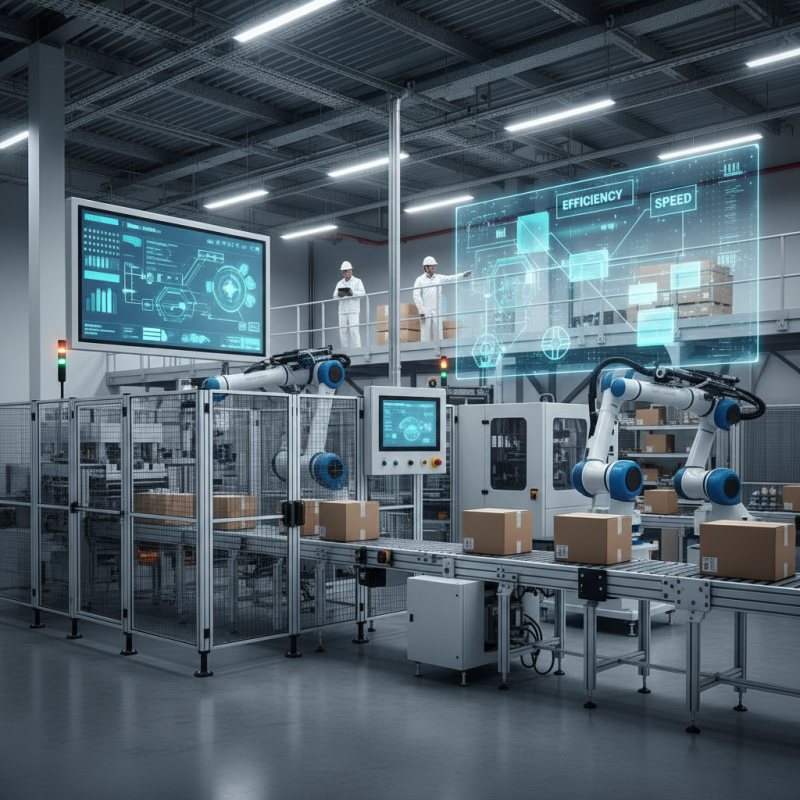
The Role of Industrial Packaging Automation in Streamlining Production Lines
Industrial packaging automation plays a crucial role in streamlining production lines. By integrating advanced technologies, businesses can enhance operational efficiency. According to a recent industry report, companies adopting automation have seen a 20% increase in production speed. This data highlights the significance of automation in the packaging sector.
Automated systems minimize human error, ensuring consistent quality. Reports show that packaging lines with automation have reduced defects by up to 30%. This leads to less waste and lower costs. Moreover, automated processes allow for quicker adjustments based on production demands, adapting efficiently to market needs. When challenges arise, companies can rely on accurate data from these systems to make informed decisions.
Tip: Regularly assess your automation system effectiveness. Update software, monitor performance, and gather team feedback for improvements. This proactive approach can significantly enhance overall productivity.
Embracing new technologies creates a more adaptive production environment. However, it's essential to address potential skill gaps among employees. Training programs can ensure the workforce effectively utilizes these systems. Without adequate training, even the best automation tools can underperform, highlighting a critical area for reflection and improvement.
Impact of Industrial Packaging Automation on Production Efficiency
Key Technologies Driving Packaging Automation Efficiency Improvements
The rapid evolution of technology is transforming the packaging industry. Automation is central to this change. Key technologies driving efficiencies in industrial packaging include robotics, IoT, and AI. According to a recent report by Smithers, automated packaging could improve speed and reduce labor costs by up to 20%.
Robotic systems play a significant role in streamlining operations. They handle repetitive tasks with accurate precision. For example, palletizing robots can stack products more efficiently than manual labor. This reduces potential injuries and allows human workers to focus on complex tasks. However, integrating these systems can be challenging. Companies must ensure their workforce is trained to work alongside these systems effectively.
IoT enables real-time monitoring of packaging processes. Sensors provide vital data on machine performance. This leads to proactive maintenance, reducing downtime. Studies indicate that companies using IoT solutions in packaging see a 15% boost in overall productivity. But these improvements come with costs. Investing in technology requires careful financial planning. Organizations need to weigh immediate costs against long-term gains.
Quantifying Efficiency Gains: Statistics on Automation in Packaging Operations
Industrial packaging automation has transformed operational efficiency in recent years. According to a 2022 report by the International Society of Automation, companies that adopted automation saw an efficiency boost of up to 30%. This statistic highlights how integrating automated solutions can significantly reduce labor costs and increase throughput. The implementation of automated systems can streamline processes, minimize errors, and enhance productivity. These gains are particularly visible in high-volume packaging environments.
In addition, a study published by the Packaging Machinery Manufacturers Institute revealed that 70% of firms reported improved accuracy in packaging due to automation. This can lead to a decrease in product waste and better resource utilization. However, not all automation solutions are equally effective. The challenge lies in selecting the right technology that aligns with operational goals. Companies must assess their unique needs and consider the long-term benefits against initial investment costs. Transitioning to automated processes may reveal complexities that warrant further evaluation and adjustment.
Case Studies: Successful Implementation of Automation in Various Industries
In various industries, the shift towards automation in packaging has brought measurable efficiency gains. A major food manufacturer implemented automation to streamline its packaging line. They replaced manual labor with robotic arms for sealing and labeling, reducing errors and increasing speed. The result was a significant boost in production rates, achieving up to 30% more output.
Another case from the pharmaceutical sector illustrates similar successes. An automated system for tracking inventory helped minimize delays. It also reduced human errors in packaging, ensuring compliance with strict regulations. However, the transition wasn’t without challenges. Training staff to operate new technology proved time-consuming and led to initial setbacks.
The automotive industry offers another compelling example. Companies have embraced automated systems to manage complex supply chains. While efficiency improved, the reliance on technology raised concerns about potential downtime. The incidents of system failures highlighted the need for contingency planning. These lessons show that while automation can enhance productivity, careful implementation and ongoing support are crucial for lasting success.
Future Trends in Packaging Automation and Their Impact on Efficiency
The future of packaging automation
leans towards smart technologies.
Robotics and artificial intelligence are set to revolutionize operations.
These innovations enhance both speed and accuracy in packaging processes.
Automated systems can adapt to various product sizes, driving versatility in production lines.
This ability minimizes downtime, keeping workflow consistent and efficient.
Sustainability is becoming another crucial factor.
Eco-friendly packaging materials are gaining traction.
Automation can help reduce waste during production, which is a vital consideration.
Companies are exploring solutions that require less energy and lower resource consumption.
However, implementing these changes can be challenging. Companies must assess their existing systems thoroughly to integrate new technologies effectively.
Data analytics also plays a vital role.
Automated systems generate valuable data regarding production performance and efficiencies.
This data can highlight areas for improvement, but it requires proper analysis.
Many organizations struggle to interpret this information.
The future suggests a balanced approach, combining human oversight with automated insights for maximum efficiency.
The path ahead is promising but demands thoughtful execution.
FAQS
: Automation increases efficiency by replacing manual tasks. It can boost production rates significantly, often by 30%.
Automated systems track inventory and reduce errors. They help ensure compliance with regulations but require extensive training.
Staff training can be time-consuming. Initial setbacks may occur during the transition to new technologies.
Yes, system failures can lead to downtime. Companies must plan contingencies to maintain efficiency.
Smart technologies, robotics, and AI will enhance speed and accuracy. These innovations improve versatility in production lines.
Companies are using eco-friendly materials and reducing waste. However, integrating new sustainable technologies can be challenging.
Automated systems provide valuable data on production efficiency. Proper analysis is crucial for identifying areas for improvement.
Many organizations struggle to analyze production data effectively. This can hinder understanding operational performance.
Careful planning, ongoing support, and a balanced human-technology approach are needed for lasting success.
The future promises enhanced efficiency but demands thoughtful execution and adaptation to new technologies.
Conclusion
Industrial packaging automation plays a crucial role in enhancing production line efficiency by streamlining various processes involved in packaging operations. By integrating key technologies such as robotic systems, conveyor belts, and advanced software, manufacturers can reduce manual labor and minimize errors, which ultimately leads to faster production cycles. Understanding how does industrial packaging automation work is vital, as it employs sophisticated algorithms and real-time data to optimize workflows, ensuring that products are packaged swiftly and accurately.
Statistics indicate significant efficiency gains through automation, with many companies reporting reduced operational costs and increased output. Case studies from diverse industries illustrate successful implementations, demonstrating the transformative impact of automation. Looking ahead, future trends in packaging automation promise further innovations that will continue to improve efficiency, making it an increasingly essential aspect of modern manufacturing.

 Econe Machinery