How Can Manufacturers Reduce Packaging Waste?

Time:2026-10-01 Author:Sienna
0%

Every year, manufacturers face a familiar problem: valuable materials leave factories as boxes, films, labels, and protective inserts. The question is practical: how can manufacturers reduce packaging waste without damaging products or raising costs? The answer begins with measurement, not assumptions. The OECD’s Global Plastics Outlook reports that packaging creates about 40% of global plastic waste. That figure makes packaging redesign difficult to ignore.

Manufacturers can start with packaging audits. Weigh every component, from stretch film to adhesive tape. Record damage rates, transport distances, and recycling outcomes. Then remove unnecessary layers, reduce empty space, and choose recycled or recyclable materials where local systems support them. Reusable crates may work well for closed supply chains. They may fail when containers disappear across distant customers. Small details matter. A thinner carton can collapse during humid storage.

The United Nations Environment Programme says existing solutions could reduce global plastic pollution by 80% by 2040. Ellen MacArthur, founder of the Ellen MacArthur Foundation, states: “We need to eliminate the plastic we don't need, innovate to ensure what we do need is reusable, recyclable, or compostable, and circulate all the plastic we use.” Her principle connects design with responsibility. Still, no single material solves every application. Compostable packaging can confuse collection systems. Recycled content can face inconsistent supply. Manufacturers should publish packaging weights, recycled-content percentages, and recovery results. Progress needs evidence. It also needs honest reflection, because a package that looks sustainable may create hidden transport or sorting impacts.
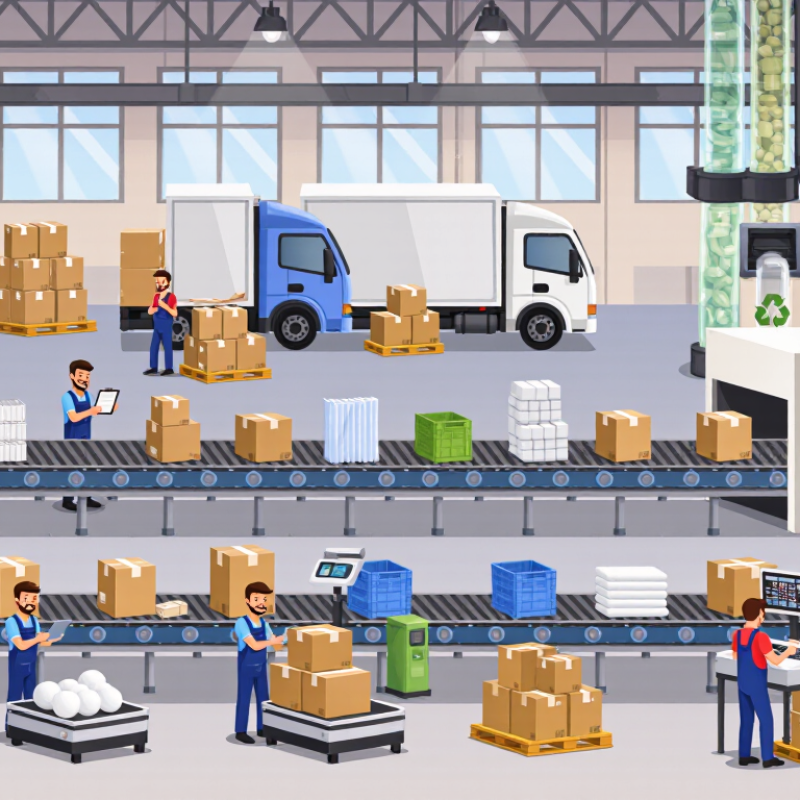
How Can Manufacturers Reduce Packaging Waste?

Understanding Packaging Waste in Manufacturing

How Can Manufacturers Reduce Packaging Waste?

Understanding Packaging Waste in Manufacturing

Packaging waste in manufacturing rarely comes from one source. It appears as damaged cartons, excess film, rejected labels, empty pallets, and unused protective inserts. During a factory review, I once found several bins filled with trimmed cardboard from a single packing line. The material looked harmless, but its weekly volume exceeded the site’s original estimate.

Measurement must begin at the workstation. Record the packaging weight used for each product, not only the total monthly purchase. Separate clean cardboard, plastic film, metal straps, and contaminated materials. This reveals where waste actually occurs. A box may be oversized because engineers designed it for the heaviest product. A film wrapper may be too long because operators lack a clear cutting guide.

Production teams should also inspect damage rates. Replacing damaged goods creates a second layer of waste, including new packaging and extra transport. Simple trials can help: adjust carton dimensions, test reusable separators, or change the packing sequence. However, a lighter package is not automatically better. If it causes breakage, the environmental cost may increase.

Small details matter.

Reliable decisions need cooperation between operators, quality staff, purchasing teams, and waste contractors. Local recycling rules can differ, especially for laminated materials and adhesive labels. Records should be checked regularly because supplier specifications, product sizes, and customer requirements change. Some early trials will fail. That failure still provides useful evidence, if the team records why.

How Can Manufacturers Reduce Packaging Waste?

Global plastic waste generated by end-use sector, 2019 (million tonnes)

Packaging generated approximately 142 million tonnes of global plastic waste in 2019, making it the largest end-use category. Manufacturers can reduce this impact by eliminating unnecessary components, lightweighting packaging, increasing recycled content, and designing packaging for reuse or recycling.

Source: OECD, Global Plastics Outlook, 2022. Values are rounded estimates.

Assessing Packaging Materials and Waste Sources

Manufacturers can reduce packaging waste by understanding what enters the facility and what leaves it unused. A packaging assessment should begin with a simple material inventory. Record every carton, film, pouch, label, tray, pallet, and protective insert. Include thickness, weight, recycled content, and disposal route. Small items often escape attention.

A production walk-through reveals more than a spreadsheet. Watch operators open cartons, adjust sealing equipment, and remove damaged materials. Weigh unused film at the end of each shift. Measure rejected packs separately. Measure it. Waste may come from oversized boxes, poor cutting patterns, excessive product protection, or moisture-sensitive materials. In one assessment, damaged cartons seemed responsible for most losses. Later observations showed that hurried changeovers created more waste than the cartons themselves.

Material choice also needs practical testing. A lighter package may reduce material use but fail during transport. A recyclable layer may require careful separation or create sealing problems. Compare performance under vibration, compression, humidity, and temperature changes. Ask suppliers for verified composition data, but check samples independently. Documentation can be incomplete. That is a useful warning.

Waste sources should be grouped by process stage: purchasing, storage, filling, sealing, quality inspection, transport, and customer returns. Track each category for several weeks, not one convenient day. Seasonal orders and inexperienced staff can distort the results. Review the data with production workers, because they often notice recurring problems before management does. A pilot change on one line can expose hidden costs before wider implementation.

Redesigning Packaging for Material Efficiency

How Can Manufacturers Reduce Packaging Waste?

Redesigning Packaging for Material Efficiency

Manufacturers can cut packaging waste by measuring every layer, fold, and empty space. A practical audit starts with the product’s actual protection needs. Measure material weight, package volume, damage rates, and transport density. Small changes matter.

A rigid box may use less cardboard after removing decorative inserts. A molded component can replace several plastic cushions. However, thinner packaging is not automatically better. If products arrive damaged, waste simply moves from the factory to the customer. Drop tests, vibration trials, and humidity checks should guide each redesign. Packaging engineers should also review supplier data and lifecycle impacts before approving a new format.

Use fewer materials where performance allows. Right-size cartons around the product, then adjust folding patterns to improve strength. Replace mixed-material structures with simpler formats when recycling systems can process them. Clear labels help workers and customers separate components correctly. Still, recyclability claims need evidence, not attractive wording. Local collection systems may accept less than designers expect.

The difficult part is balancing efficiency with reliability. A smaller package may reduce truck space but increase assembly time. A recyclable material may need more weight to prevent failure. These trade-offs deserve honest testing. Manufacturers should record results, question assumptions, and revise designs after real shipment feedback. Perfect packaging is unlikely. Better packaging is measurable, practical, and willing to improve.

Implementing Reuse, Recycling, and Recovery Systems

How Can Manufacturers Reduce Packaging Waste?

Implementing Reuse, Recycling, and Recovery Systems

Packaging waste falls when manufacturers design systems, not isolated products. A reusable crate can replace dozens of single-use boxes during repeated deliveries. However, reuse only works when return routes, cleaning capacity, and inspection rules are reliable. Plants should record return rates, damage, washing water, and transport emissions. These figures reveal whether reuse creates real savings.

Recycling begins with simpler material choices. Avoiding unnecessary layers makes sorting easier at recovery facilities. Clear labels, compatible polymers, and removable components can reduce contamination. Manufacturers should inspect waste bins weekly and weigh discarded film, cardboard, and damaged packaging. Our first pilot failed because workers lacked convenient collection points. The lesson was practical: good instructions cannot repair a poor workflow.

Recovery systems handle materials that cannot be reused or recycled economically. Clean production scraps may enter controlled recovery channels, while contaminated materials require careful assessment. Contracts should define accepted materials, weighing methods, reporting duties, and final treatment. Independent audits can verify these records. Recovery is not a perfect substitute for prevention. It can also hide waste problems when companies measure only diversion rates. A stronger system tracks material reduction, reuse cycles, contamination, and actual recovery outcomes. Small trials help. Then, teams can adjust container sizes, pickup schedules, and employee training using measured results.

Measuring Results and Improving Waste Reduction Programs

How Can Manufacturers Reduce Packaging Waste?

Measuring Results and Improving Waste Reduction Programs

A waste reduction program needs more than a lighter carton. It needs reliable baseline data. Record packaging weight, material type, production volume, damage rates, and disposal costs by product line. The OECD Global Plastics Outlook reports that only 9% of global plastic waste was recycled in 2019. That figure makes measurement difficult, but necessary.

Weigh every shipment. Track rejected packs and damaged goods separately. A thinner box may reduce material use but increase product loss. That is not progress. The U.S. Environmental Protection Agency reported 82.2 million tons of containers and packaging in municipal solid waste in 2018. Manufacturers should compare waste intensity, such as kilograms of packaging per finished unit, each month. Targets should include recycled content, recovery rates, and supplier performance. Some measurements may be wrong at first. That is normal. Audit the method before judging the team.

Tips: Start with one production line. Photograph waste points during each shift. Use calibrated scales, not estimates. Review results with operators, because spreadsheets rarely show crushed corners or overfilled bins. Test one packaging change for four weeks, then compare material savings, damage claims, machine downtime, and customer complaints. Keep the change only when the full result improves. Industry guidance from ISO 14001 also supports documented objectives, monitoring, and corrective action. A program that cannot show its evidence will slowly become a slogan.

How Can Manufacturers Reduce Packaging Waste? - Measuring Results and Improving Waste Reduction Programs

A practical measurement framework using recognized packaging-recycling reference targets, material-specific KPIs, and calculation methods for continuous improvement.

Packaging Waste Dimension Unit of Measure 2025 Reference Target 2030 Reference Target How to Measure Results Recommended Waste-Reduction Action
All packaging waste recycled % by weight At least 65% At least 70% Recycled packaging waste ÷ total packaging waste × 100 Set annual recycling-rate goals and review material losses, contamination, and disposal records.
Paper and cardboard packaging % by weight At least 75% At least 85% Track purchase weights, recovered quantities, rejected loads, and verified recycling certificates. Reduce unnecessary layers, increase recycled fiber content, and design packs for easy fiber recovery.
Glass packaging % by weight At least 70% At least 75% Compare collected glass weight with the total glass packaging placed on the market. Use lightweight formats where technically suitable and prevent ceramic, stone, and other material contamination.
Ferrous metal packaging % by weight At least 70% At least 80% Measure steel packaging recovered through approved sorting and metal-recycling systems. Improve magnetic sorting, reduce mixed-material components, and increase the use of recyclable closures.
Aluminium packaging % by weight At least 50% At least 60% Record aluminium packaging supplied, collected, sorted, and sent to verified recyclers. Minimize coatings and composite structures that interfere with sorting or remelting.
Plastic packaging % by weight At least 50% At least 55% Measure plastic packaging by polymer type, recycling route, yield loss, and contamination rate. Prioritize mono-material designs, clearly identifiable polymers, recycled content, and reusable systems where feasible.
Wood packaging % by weight At least 25% At least 30% Track wooden pallets, crates, and cases reused, repaired, recycled, or disposed of. Increase pallet reuse, repair damaged units, and separate treated wood from recyclable wood streams.
Packaging intensity kg packaging per finished-product unit Annual reduction required by internal baseline Annual reduction required by internal baseline Total packaging material purchased ÷ finished-product units shipped Set a baseline year, eliminate over-packaging, optimize pack dimensions, and monitor damage rates.
Landfill or incineration diversion % by weight Report annual trend Report annual trend Material recovered, reused, or recycled ÷ total packaging waste generated × 100 Use a waste hierarchy: prevention first, then reuse, recycling, recovery, and disposal as the last option.
Recycled content in packaging % by weight Report by material and product category Report by material and product category Verified post-consumer recycled material ÷ total packaging material × 100 Specify recycled-content requirements and verify supplier declarations through chain-of-custody records.

Reference recycling targets are based on the European Union packaging and packaging-waste targets established under Directive 94/62/EC, as amended. Company-specific performance should be reported separately using verified mass-balance data, consistent boundaries, and a clearly defined baseline year.

FAQS

What should a packaging assessment include?

Record every carton, film, pouch, label, tray, pallet, and protective insert. Include weight, thickness, recycled content, and disposal route. Small items matter.

Why is a production walk-through important?

A spreadsheet cannot show hurried changeovers or damaged sealing material. Watch operators open cartons and adjust equipment. Weigh unused film after each shift.

How can manufacturers identify the main waste sources?

Group waste by purchasing, storage, filling, sealing, inspection, transport, and returns. Track each category for several weeks. One day can mislead.

Can lighter packaging always reduce environmental impact?

No. A thinner box may fail during vibration, humidity, or compression. It may also increase damaged products and customer complaints. Less material is not always better.

When does reusable packaging work well?

Reuse needs dependable return routes, cleaning capacity, and inspection rules. Record return rates, damage, washing water, and transport emissions. Empty return trips can weaken the benefit.

How can recycling systems become more effective?

Choose simpler materials with fewer layers and removable components. Use clear labels and convenient collection points near workers. Good instructions cannot fix a poor workflow.

What should manufacturers measure each month?

Track packaging weight, production volume, damage rates, disposal costs, and waste per finished unit. Measure rejected packs separately. Use calibrated scales.

How should a company test a packaging change?

Start with one production line and test the change for four weeks. Compare material savings, product damage, machine downtime, and complaints. Our first assumptions may be wrong. Keep the change only when the full result improves.

Conclusion

Manufacturers looking to understand how can manufacturers reduce packaging waste should begin by examining where waste is generated throughout the production, storage, and shipping process. A detailed assessment of packaging materials can reveal unnecessary layers, excessive dimensions, difficult-to-recycle components, and opportunities to replace single-use items with more efficient alternatives. Redesigning packaging around durability, lightweight materials, and right-sized formats can reduce resource consumption while maintaining product protection.

Effective waste reduction also depends on practical reuse, recycling, and recovery systems. Manufacturers can establish return procedures for reusable containers, separate materials at the source, and work with qualified recycling partners to recover valuable resources. Progress should be measured through clear indicators such as material usage, waste volume, recycling rates, and disposal costs. Regular reviews of these results allow companies to improve packaging designs, refine internal procedures, and build a continuous program that reduces environmental impact and operating expenses over time.

Sienna

Sienna

Sienna is a skilled marketing professional with a deep expertise in our company’s core products and services. With a passion for innovation and detail, she plays a pivotal role in crafting insightful blog posts that not only highlight the unique features of our offerings but also provide valuable......