Why and How Does Industrial Packaging Automation Work?

Time:2026-10-25 Author:Oliver
0%

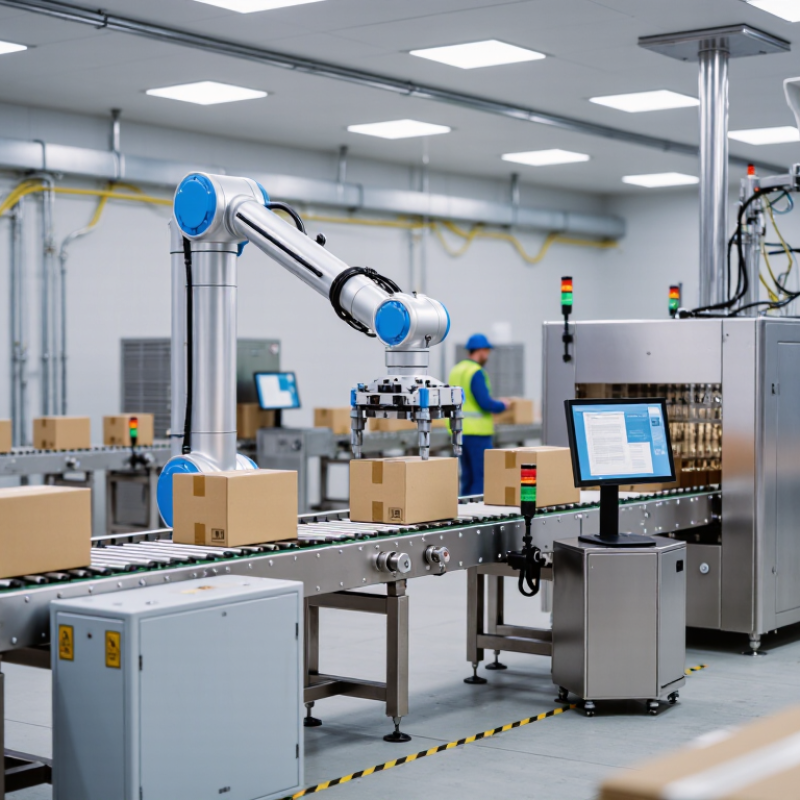
Industrial packaging automation is no longer limited to high-speed filling lines. It now connects sensors, robots, vision systems, software, and safety controls across the factory. So, how does industrial packaging automation work in practice? A product enters through a conveyor, sensors identify its position, and programmable machines coordinate filling, sealing, labeling, case packing, and palletizing. Data moves continuously between equipment, allowing operators to detect jams, measure output, and adjust production settings.

The International Federation of Robotics reported 541,302 industrial robots were installed worldwide in 2023. Its findings show how robotics is becoming a practical production tool, not a futuristic experiment. PMMI industry reports also identify labor shortages, flexible production, and equipment integration as major packaging priorities. Jorge Izquierdo, PMMI’s vice president of market development, has stated, “Automation must solve a business problem, not merely add technology.” That principle matters. A robotic arm may look impressive, but it cannot repair poor workflows.

Modern systems often use machine vision to inspect a carton’s seal or confirm a label’s position. Industrial sensors can stop a conveyor within seconds. Operators still supervise quality, maintenance, changeovers, and unusual failures. Human judgment remains essential.

The process is not perfectly simple.

Automation can reduce repetitive handling and improve consistency, yet installation costs, training gaps, and incompatible legacy equipment create real obstacles. Some factories also automate too quickly. A careful audit should come first. Reliable implementation depends on measurable targets, clean data, validated safety procedures, and continuous improvement rather than technology alone.
Why and How Does Industrial Packaging Automation Work?

What Industrial Packaging Automation Means and Why It Matters

Industrial packaging automation means using connected machines to prepare, protect, label, and move products with limited manual handling. It is more than placing boxes on a conveyor. At a typical line, sensors detect product position, weight, size, and package condition. Software uses this information to control filling, wrapping, sealing, and labeling equipment. Robotic arms may pick items, while conveyors maintain a steady rhythm. Data from each stage can record quantities, inspection results, and stoppages.

That sounds simple.

The value is practical. Consistent sealing helps protect products during storage and transport. Accurate counting reduces waste and prevents confusing shipments. Fewer manual lifts can also reduce physical strain for workers. Clear production records support quality checks and faster troubleshooting.

However, automation is not magic. A dusty sensor can misread a package. Small errors grow quickly. Human inspection still matters, especially during changeovers, maintenance, and unusual production runs. Experienced teams regularly test sensors, review rejected packages, and adjust machine settings carefully. Some operations automate too much before understanding their real bottlenecks. That is an expensive lesson. Effective automation leaves people responsible for judgment, safety, and continuous improvement.

The Main Machines and Technologies Used in Automated Packaging

Industrial packaging automation works by linking several machines into one controlled production line. Conveyors move products at a steady speed. Weighing systems measure each portion before filling. Fillers then place powders, liquids, or solid items into containers. Form-fill-seal machines can create bags, fill them, and seal them in seconds. Cartoners add products to boxes, while case packers arrange finished units for shipping. Palletizers stack cases with programmed patterns.

Sensors and programmable controllers coordinate these movements. Photoelectric sensors detect product position. Vision systems inspect labels, seals, and package shape. Checkweighers remove packs with incorrect weights. A control system records production data and adjusts timing when conditions change. In practice, alignment is rarely perfect. Dust, vibration, or uneven products can disturb the process. One delayed sensor may create several empty spaces downstream.

Tips: Match machine speed to the slowest operation, not the fastest one. Test real product samples before approving equipment. Leave access for cleaning and maintenance. Clear alarms should show the exact problem. Operators still matter, even in highly automated lines. Their observations can reveal issues that software misses. A line may run efficiently, yet waste materials through poor sealing or excessive film use. Regular checks help, but they are not flawless. Packaging teams should review failures honestly and adjust settings carefully.

Why and How Does Industrial Packaging Automation Work? - The Main Machines and Technologies Used in Automated Packaging
Packaging Stage Main Machine or Technology Primary Function Typical Input and Output Typical Performance Range Key Automation Technologies Quality and Safety Controls
Product Feeding Conveyor and Infeed System Transfers products from production equipment to the packaging line at a controlled speed and spacing. Bulk or loosely spaced products to continuously oriented products. Approximately 20–200 units per minute Variable-speed drives, photoelectric sensors, accumulation logic, programmable logic controllers, and servo motors. Overload detection, jam sensors, guarded moving parts, emergency-stop circuits, and automatic line stopping.
Product Orientation Sorting, Aligning, or Collating System Arranges products into the correct position, lane, count, or group before loading. Randomly positioned products to single-file, multi-lane, or counted groups. Commonly 30–180 units per minute Servo-controlled timing belts, star wheels, pneumatic actuators, vision sensors, and electronic synchronization. Presence detection, incorrect-position rejection, lane monitoring, and automatic fault alarms.
Primary Packaging Form-Fill-Seal Machine Forms packaging material, fills it with product, and seals it in one continuous process. Film rolls and measured product portions to sealed pouches or bags. Approximately 30–250 packages per minute, depending on format and product Servo film control, heat-seal temperature controllers, load cells, registration sensors, and PLC-based recipes. Seal-temperature monitoring, film-break detection, checkweighing, seal-jaw guarding, and reject systems.
Primary Packaging Filling and Capping Machine Dispenses a specified quantity of liquid, powder, or granular product and closes the container. Empty bottles, jars, or containers to filled and capped units. Approximately 20–600 containers per minute, depending on product and filling method Volumetric or gravimetric dosing, servo drives, level sensors, torque control, and automated recipe management. Fill-level checks, cap-presence detection, torque verification, spill monitoring, and container rejection.
Secondary Packaging Cartoner or Case Packer Loads individual products or multipacks into cartons or shipping cases and closes the package. Finished primary packs to retail cartons or corrugated cases. Approximately 10–120 cartons or cases per minute Robotic or servo pick-and-place, carton erecting, vacuum gripping, barcode reading, and motion control. Product-count verification, carton-flap inspection, glue or tape monitoring, and access-door interlocks.
Case Sealing Case Sealer Closes and seals corrugated shipping cases using adhesive, tape, or other approved closure methods. Open filled cases to sealed transport-ready cases. Approximately 10–40 cases per minute Automatic case-size adjustment, powered rollers, flap-folding controls, and sensor-based sequencing. Case-presence sensors, low-tape or low-adhesive alarms, flap-position checks, and guarded drives.
Identification Labeling, Coding, and Marking System Applies labels and prints information such as lot codes, dates, barcodes, and traceability data. Unmarked containers or cases to readable and traceable packages. Typically synchronized with line speed; often 30–300 units per minute Print-and-apply technology, thermal or inkjet coding, barcode scanners, vision inspection, and database connectivity. Code legibility checks, label-presence detection, barcode verification, reject confirmation, and audit records.
Inspection Checkweigher and Vision Inspection System Detects incorrect weight, missing components, damaged packaging, or unreadable codes without stopping the line. Sealed packages to accepted or automatically rejected packages. Approximately 30–400 packages per minute, depending on product size and inspection criteria Load cells, industrial cameras, image-processing software, sensors, reject actuators, and statistical process monitoring. Weight tolerances, camera-based defect detection, fail-safe reject confirmation, and electronic inspection records.
Palletizing Robotic or Layer Palletizer Arranges cases in stable patterns on pallets for storage and transportation. Sealed shipping cases to configured pallet loads. Approximately 10–150 cases per minute, depending on case size and pattern Robotic arms, vacuum or mechanical grippers, pallet pattern software, conveyors, and safety-rated motion control. Load-pattern verification, pallet-presence sensors, area scanners, safety fencing, and interlocked gates.
Load Stabilization Stretch Wrapper or Strapping Machine Secures palletized cases to reduce movement and damage during handling and transportation. Unsecured pallet loads to wrapped or strapped unit loads. Approximately 20–120 pallet loads per hour Film-tension control, powered turntables, automatic cut-and-seal units, strap tension control, and load sensors. Film-break detection, tension monitoring, rotating-equipment guards, access interlocks, and cycle-completion checks.
Material Handling Automated Storage and Retrieval or Mobile Robot System Moves pallets, cases, or packaging materials between production, storage, and dispatch areas. Finished pallets or raw packaging materials to assigned locations. System-dependent; commonly 10–100 pallet movements per hour Warehouse-management software, barcode or radio-frequency identification, navigation sensors, conveyors, and fleet control. Collision avoidance, access control, location confirmation, load detection, and route-status monitoring.
Line Control PLC, HMI, SCADA, and Manufacturing Data System Coordinates machines, displays operating conditions, records production data, and supports traceability. Sensor and machine signals to coordinated control actions, reports, and production records. Real-time control; scan and response cycles commonly occur in milliseconds Programmable logic controllers, human-machine interfaces, industrial networks, supervisory software, and production databases. Role-based access, alarm history, recipe control, backup procedures, electronic audit trails, and performance dashboards.

How Products Move Through an Automated Packaging Line

Industrial packaging automation works by coordinating machines, sensors, and software around one continuous product flow. Products enter through a depalletizer or feeder, then move along conveyors at controlled speeds. Photoelectric sensors detect gaps, position, and orientation. A programmable controller adjusts each station within milliseconds.

The line may fill, weigh, inspect, seal, label, and pack products into cases. Vision systems can reject damaged seals or incorrect labels before shipment. A case packer groups products, while a robotic palletizer builds stable layers. Stretch wrapping secures the load for transport. According to PMMI’s 2023 Packaging Automation: Trends and Innovations report, labor availability remains a major reason companies invest in automation. The International Federation of Robotics reported 541,302 industrial robots installed worldwide in 2023. Packaging lines are part of this wider shift, but automation is not flawless. A single misaligned carton can stop the entire line.

Tips: Keep conveyors clean and sensor lenses clear. Test product changeovers with real packaging materials. Record stoppages, not only production speed. Small data gaps can hide large losses. Technicians should review rejected products daily. The fastest setting is not always the most reliable. A line may look efficient while wasting film, energy, or operator time. That uncomfortable detail deserves attention.

Why and How Does Industrial Packaging Automation Work?

How products move through an automated packaging line

The line uses conveyors, sensors, filling or forming equipment, sealing units, vision inspection, labeling systems, case packers, and palletizers. The reference cycle times below represent typical single-lane operations in automated packaging environments; actual performance depends on product format, machine design, and changeover requirements.

How Sensors and Control Systems Coordinate Each Packaging Step

Why and How Does Industrial Packaging Automation Work?

Industrial packaging automation works through constant communication between sensors and control systems. A sensor detects a container entering the line. The controller then confirms its position before filling begins. Another sensor checks the product level or package weight. If the reading falls outside the set range, the system pauses or diverts the package.

Each step depends on accurate timing. Conveyor encoders track movement, while photoelectric sensors identify gaps between packages. Temperature sensors monitor sealing conditions. Vision systems can inspect labels, closures, and visible damage. The control system combines these signals and sends commands to motors, valves, and actuators. In practical line inspections, small delays often cause larger problems. A loose cable or dusty lens can create repeated stoppages. No line is perfectly stable.

Tips: Keep sensors clean and calibrated. Test alarm settings during planned maintenance. Record recurring faults, not only production output. Operators should understand why a package is rejected. This prevents unnecessary adjustments. It also improves accountability.

Control logic should include safe stop conditions and clear restart procedures. Good systems do not merely move packages faster. They make decisions consistently and provide useful feedback. Still, automation can misread unusual packaging shapes or reflective surfaces. Engineers should review these exceptions instead of forcing every fault into one setting. Reliable performance comes from measured adjustments, documented testing, and trained people working with the system.

How Automation Improves Packaging Speed, Safety, and Consistency

Industrial packaging automation links conveyors, sensors, robots, and control software into one coordinated workflow. A photoelectric sensor detects each carton, while servo-driven equipment fills, seals, labels, and transfers it. This reduces manual handling and keeps products moving at a stable rhythm. The International Federation of Robotics reported 541,302 industrial robots were installed worldwide in 2023, showing how widely automated production is expanding.

Speed is only one advantage. Automated case packers can repeat precise movements for hours, reducing fatigue-related mistakes and uneven sealing. A checkweigher can stop an underfilled package before it reaches shipping. The Manufacturing Institute has repeatedly identified labor shortages as a major manufacturing challenge, making automation useful for repetitive and physically demanding tasks. Still, faster equipment does not fix poor line design. A misaligned guide rail can create hundreds of damaged cartons quickly.

Safety improves when guarding, interlocks, emergency stops, and clear maintenance procedures work together. Consistency depends on calibration, clean sensors, and controlled product changeovers. PMMI industry research continues to identify flexibility and easier changeovers as important packaging priorities. That reality is easy to underestimate. An automated line may run quickly, yet operators still need training and judgment. Software alarms can be ignored, sensors can drift, and packaging materials can behave differently between batches. Human oversight remains essential.

FAQS

What is industrial packaging automation?

It uses connected machines, sensors, software, and robots to prepare, protect, label, and move products. Manual handling is limited. Human judgment remains necessary.

How does a product move through an automated packaging line?

A feeder places products onto conveyors. Sensors check position, gaps, size, and orientation. Machines may fill, weigh, inspect, seal, label, and pack each item.

What equipment is commonly used?

Common equipment includes conveyors, feeders, filling machines, checkweighers, vision systems, case packers, and robotic palletizers. Stretch wrapping secures finished loads.

How can automation improve packaging consistency?

Machines repeat filling, sealing, and labeling movements with controlled timing. Checkweighers can stop underfilled packages. Clean sensors and regular calibration still matter.

Can automation make packaging safer?

Guarding, emergency stops, interlocks, and clear maintenance procedures reduce risks. Automated lifting can reduce physical strain. Poor training can still create danger.

What problems can stop an automated packaging line?

A misaligned carton may block several stations. Dusty sensor lenses can misread packages. Worn guides, incorrect settings, or damaged film may also cause stoppages.

How should operators maintain an automated packaging line?

Keep conveyors clean and sensor lenses clear. Test changeovers with actual packaging materials. Review rejected products daily and record every stoppage, not only speed.

Is the fastest machine setting always the best choice?

No. Higher speed may increase damaged cartons, film waste, energy use, or operator delays. A slower setting can be more reliable. That assumption needs testing.

Why does human oversight remain important?

Operators handle unusual production runs, maintenance, changeovers, and unexpected alarms. Software cannot understand every situation. People must question results, even when the line looks efficient.

What should companies examine before automating?

They should identify real bottlenecks, material problems, and recurring stoppages first. Automating the wrong weakness can become expensive. That lesson is easy to miss.

Conclusion

Industrial packaging automation uses integrated machines, sensors, software, and control systems to prepare products for shipment with minimal manual handling. It may include conveyors, filling or dosing equipment, weighing systems, sealing machines, labeling units, case packers, palletizers, and inspection devices. Together, these technologies move products through each stage in a planned sequence, from product loading and container preparation to filling, closing, labeling, checking, and final palletizing.

To understand how does industrial packaging automation work, consider the control system as the coordinator of the entire line. Sensors monitor product position, quantity, weight, package condition, and machine status, while programmed controls adjust timing and trigger the next operation. If an issue is detected, the system can pause the affected section or remove the package for review. This coordinated process increases production speed, improves workplace safety by reducing repetitive handling, and creates more consistent package quality. It also helps manufacturers track performance, reduce material waste, and maintain reliable output across long production runs.

Oliver

Oliver

Oliver is a seasoned marketing professional with a wealth of expertise in driving brand awareness and engagement. With a deep understanding of our company's product offerings, he consistently delivers high-quality content that enriches our professional blog. His insights not only shed light on......