What Is the Future of Packaging Machinery in China?

Time:2026-11-01 Author:Liam
0%

China’s packaging machinery sector is changing as manufacturers respond to rising labor costs, shorter product runs, and tighter quality expectations. For food, beverage, pharmaceutical, and personal-care producers, a filling line must do more than run quickly. It must handle frequent changeovers, maintain accurate dosing, and provide useful production data. These demands are shaping what is the future of packaging machinery in China.

Automation will remain central, but the next gains may come from better integration rather than simply faster machines. Sensors, machine vision, and predictive maintenance can help operators spot faults before a line stops. Flexible equipment is also valuable: a small producer may need to switch bottle sizes or packaging formats within a single shift. That sounds simple. It rarely is. Even advanced systems require skilled setup, reliable components, and practical support after installation.

Sustainability will add pressure to redesign both machinery and packaging processes. Equipment makers are exploring ways to run lightweight materials, reduce energy use, and limit production waste. At the same time, buyers will expect clear performance data, not broad promises. China’s large manufacturing base creates room for rapid testing and deployment, yet adoption will vary by company size and sector. Forecasts can miss the details. This outline examines the technologies, market pressures, and investment choices likely to influence the industry, while considering where expectations may outpace real factory conditions.
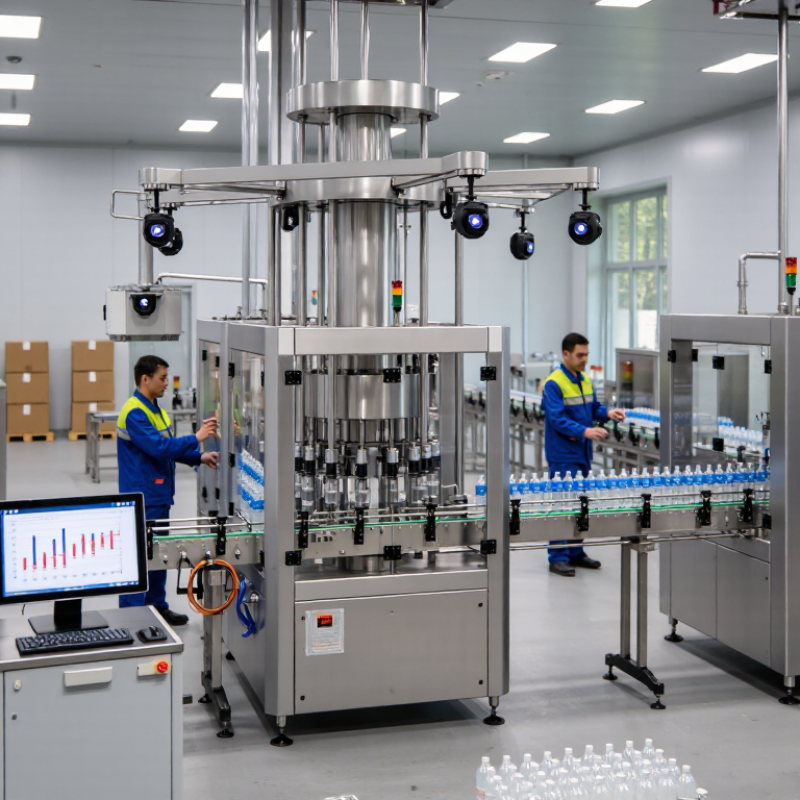
What Is the Future of Packaging Machinery in China?

Scope and Main Functions of Packaging Machinery in China

What Is the Future of Packaging Machinery in China?

Scope and Main Functions of Packaging Machinery in China

Packaging machinery covers more than filling and sealing. In China, a production line may form cartons, fill bottles, apply labels, print batch codes, inspect seals, and pack cases. Conveyors connect these steps; palletizers prepare finished goods for shipment. That is the core.

The equipment’s main functions are to raise throughput, keep pack sizes consistent, reduce manual handling, and support product identification. Sensors can detect missing caps or poorly sealed packs before they leave the line. The 2024 Grand View Research Packaging Machinery Market report valued the global market at US$45.8 billion in 2023 and projected 4.8% annual growth through 2030. This is global context, not a China-only estimate, but it signals sustained demand for automated packaging.

In China, machinery choices vary with product type, pack format, factory space, and changeover frequency. A beverage line may prioritize fast filling and rinsing; a food line may need precise portioning and cleanable surfaces. Not just speed. A practical assessment should also consider spare parts, operator training, energy use, and how quickly the line handles a new package size. Some factories still optimize for maximum output first. That can be a costly oversight when frequent changeovers interrupt production.

The Current State of China's Packaging Machinery Industry

China’s packaging machinery industry serves a large and varied manufacturing base, from food and beverage plants to pharmaceutical and household-goods factories. The China Packaging Federation reported that above-scale packaging enterprises generated RMB 1.154 trillion in operating revenue in 2023. This figure covers the wider packaging industry, not machinery makers alone. That distinction matters. It signals substantial demand for filling, sealing, labeling, and carton-forming equipment, but should not be mistaken for machinery-sector sales.

Automation is increasingly visible on factory floors. The International Federation of Robotics reported 276,288 industrial robots installed in China in 2023, equal to 51% of global installations that year. Not all serve packaging lines. Still, the scale points to a strong automation ecosystem that machinery suppliers can draw on.

In practice, buyers often look for compact lines, quick format changes, and reliable sensors that reduce stoppages. Small details count: a misaligned label or inconsistent seal can slow an entire shift. Domestic equipment ranges from basic, cost-conscious systems to integrated production lines, though performance and service quality can vary.

Faster upgrades are attractive, but they also expose a weakness: some factories still need better integration, operator training, and maintenance planning.

Technologies Transforming Chinese Packaging Equipment

What Is the Future of Packaging Machinery in China?
Technologies Transforming Chinese Packaging Equipment

Chinese packaging machinery is moving toward more connected and flexible production. Machine vision, servo control, robotics, and line-monitoring software are increasingly used together. On a filling line, cameras can spot a crooked label while servo-driven conveyors adjust spacing. This can reduce stoppages during frequent package changes. But reliable results still depend on good setup and maintenance.

Tips: Test equipment with your actual containers, film, labels, and product. Check cleaning access, changeover time, and spare-part availability. Ask for a production run using real materials; dusty cartons or uneven seals can cause jams that ideal samples will not reveal.

Data tools can help maintenance teams notice recurring faults, such as a sealing temperature that drifts during a long shift. Yet more sensors do not automatically mean better decisions. Staff need training, and older equipment may not connect easily with newer systems. The transition is uneven. Some factories may gain more from improving changeover routines than from adding complex automation. Lighter packaging materials also create new challenges, since films can feed differently and require careful sealing adjustments.

What Is the Future of Packaging Machinery in China? - Technologies Transforming Chinese Packaging Equipment
Technology Where It Is Used Practical Capability How to Measure Its Impact Development Direction
Servo-driven motion control Filling, sealing, labeling, cartoning, and case-packing equipment Enables precise, adjustable movement and coordinated machine sequences; electronic settings can simplify format changes. Changeover time, positioning accuracy, reject rate, and energy use per production run More recipe-based control and integration with sensors and line-level automation
Machine vision and inspection Print and label checks, cap and seal inspection, code reading, and package presence checks Cameras and image-processing software can identify defined visual defects and trigger rejection or alarms. Detection and false-reject rates, inspection coverage, and traceability-record completeness More adaptable inspection settings for different package formats and product variants
Robotics and automated handling Pick-and-place, packing, palletizing, and movement between production stations Robotic systems can perform repeatable handling tasks and be configured for different product or case patterns. Throughput, handling damage, unplanned stops, and manual handling hours More flexible cells that can be reconfigured for changing product mixes and layouts
Industrial connectivity and line monitoring Connected packaging lines, production dashboards, and equipment-maintenance systems Machine data can be collected to track operating status, production counts, alarms, and downtime. Data completeness, downtime by cause, response time to alarms, and overall equipment effectiveness Greater interoperability between packaging machines, plant systems, and maintenance workflows
Condition monitoring and predictive maintenance Motors, bearings, gearboxes, pumps, and other critical machine components Sensor readings and maintenance records can help teams spot abnormal conditions and plan inspections. Unplanned downtime, maintenance hours, repeat failures, and time between failures More maintenance decisions based on equipment condition rather than fixed intervals alone
Digital twins and virtual commissioning Packaging-line design, layout planning, control-system testing, and operator training A digital model can be used to examine layouts or test selected control logic before physical installation. Commissioning time, design changes after installation, and line-balance accuracy Closer links between machine design data, production planning, and service documentation
Flexible and modular machine design Facilities handling multiple container sizes, pack formats, or short production runs Adjustable modules and reusable machine sections can support format changes without redesigning an entire line. Changeover duration, number of supported formats, and time required to add a new product Equipment designed for faster reconfiguration and easier expansion of production capacity
Packaging-material and energy efficiency Form-fill-seal, wrapping, sealing, and other processes that consume packaging materials or process energy Accurate dosing, sealing control, and process settings can help reduce avoidable material use and production waste. Material use per packaged unit, scrap rate, energy per production unit, and seal-defect rate Equipment increasingly configured to handle packaging specifications that prioritize material efficiency and recyclability

Note: The indicators listed are measurement suggestions, not reported market statistics or guaranteed performance results.

Market Drivers and Challenges Facing the Industry

China’s packaging machinery sector is being shaped by demand for faster changeovers, tighter quality control, and more flexible production. Food, beverage, and personal-care plants often need equipment that can handle several package sizes on one line. Sensors and machine-vision checks can help detect crooked labels, loose caps, or inconsistent fills. The gains depend on careful setup, not automation alone. Small faults still matter.

Costs and integration remain practical challenges. A compact factory may lack floor space, stable power, or technicians trained to maintain advanced controls. Upgrading one machine can also expose compatibility problems with conveyors, fillers, or older software. Energy use, spare-part availability, and downtime deserve attention alongside purchase price. Some forecasts sound too smooth; real production lines are less predictable. A trial with actual materials can reveal jams, seal issues, and changeover delays before a full installation.

Tips: Ask suppliers for measured output under your product conditions, not just rated speed. Check cleaning access, safety features, maintenance support, and the time needed to switch formats. Keep a simple log of stoppages and rejected packs during testing. Real data helps.

What Is the Future of Packaging Machinery in China?

Market drivers and challenges facing the industry

What the data suggests: China’s growing express-parcel volume supports demand for higher-throughput packing, sorting, and end-of-line automation. Parcel volume is a demand indicator, not a direct measure of packaging-machinery sales.

Challenge: machinery makers and users must balance speed and flexibility with pressure to reduce packaging materials and waste. Source: annual statistics from China’s State Post Bureau; volumes are in billions of parcels.

Emerging Trends in China's Packaging Machinery Future

What Is the Future of Packaging Machinery in China?

Emerging Trends in China's Packaging Machinery Future

China’s packaging machinery future will be shaped less by speed alone than by flexible automation, traceability, and material efficiency. On a beverage line, vision cameras can check cap placement while servo-driven fillers switch formats with fewer mechanical resets. Broader factory investment supports this shift: IFR’s World Robotics 2024 report records 276,288 industrial robots installed in China in 2023, or 51% of global installations. That is a strong signal, not proof that every packaging plant is ready.

Demand will favor modular machines that handle smaller batches, recycled-content films, and faster changeovers. Sensors can flag seal-temperature drift before leaks reach cartons. Energy dashboards can expose idle compressors and heated jaws. Practical. Yet software alone cannot fix poor maintenance or inconsistent film quality. Equipment suppliers and converters will need shared trials, clear data standards, and operators trained to tune recipes—not just press start.

Sustainability claims also need scrutiny. A lighter pouch may use less material but complicate sorting or sealing on older lines. China’s next gains may come from retrofits as much as new installations. This outlook is uneven: large coastal factories can invest sooner, while smaller plants may add one camera or quick-change tool at a time. That slower path is often the realistic one.

FAQS

What does packaging machinery do in a Chinese factory?

It can form cartons, fill bottles, apply labels, print codes, inspect seals, and pack cases. Conveyors link the steps.

How can packaging machinery improve production?

It can increase output, keep pack sizes consistent, and reduce manual handling. Sensors may catch missing caps or weak seals. Not every fault is detected.

What should a factory consider when choosing equipment?

Match the machine to the product, package format, floor space, and changeover frequency. Also check spare parts, energy use, cleaning access, and operator training.

How are cameras and servo controls used on packaging lines?

Cameras can spot crooked labels, while servo-driven conveyors adjust spacing. These tools may reduce stoppages during package changes. Setup still matters.

Why should equipment be tested with real packaging materials?

Real containers, film, labels, and product can reveal problems that ideal samples hide. Dusty cartons or uneven seals may cause jams. A real test helps.

Can factory data tools prevent machine faults?

Monitoring systems can flag issues such as drifting sealing temperatures. But more sensors do not guarantee better decisions. Staff need training.

What changes may shape packaging machinery in China?

Flexible automation, traceability, and material efficiency are likely to matter. Modular machines may help with smaller batches and faster changeovers.

Will every Chinese factory adopt advanced automation quickly?

No. Large factories may invest sooner, while smaller plants may add one camera or quick-change tool at a time. That slower path can be realistic.

Conclusion

Packaging machinery in China plays a vital role in filling, sealing, labeling, wrapping, and inspecting products across a wide range of industries. The sector has grown alongside the country’s manufacturing capacity, supported by expanding demand and the gradual shift from basic equipment toward more efficient, automated systems. Digital controls, robotics, machine vision, and data-driven monitoring are transforming equipment by improving precision, productivity, and flexibility.

Looking ahead, what is the future of packaging machinery will depend on how effectively manufacturers respond to demand for smarter, more adaptable, and resource-efficient production. Growth opportunities include automation, customized equipment, and systems designed to reduce material use and downtime. At the same time, companies must address challenges such as rising development costs, technical skill shortages, and the need to meet increasingly varied customer requirements. Continued innovation and investment in reliable, connected technologies are likely to shape the industry’s next stage.

Liam

Liam

Liam is a dedicated marketing professional with a profound expertise in the industry, where he excels at highlighting the unique advantages of our core products. With a keen understanding of market trends and consumer needs, Liam frequently updates our company’s professional blog, providing......